Abraham Lincoln Ethnicity: The English Roots of America’s 16th President

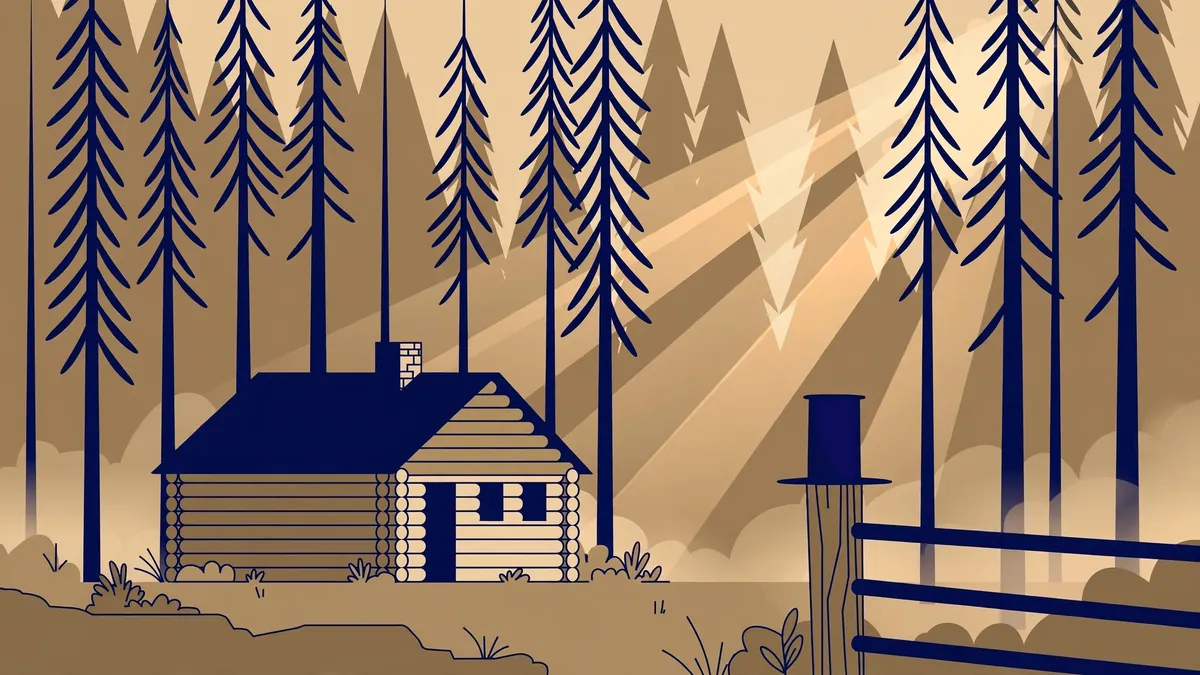
Abraham Lincoln was of English descent, with additional roots elsewhere in the British Isles. Born February 12, 1809, in a log cabin on Sinking Spring Farm near Hodgenville, Kentucky, the 16th President of the United States descended from Samuel Lincoln, an Englishman who emigrated from Norfolk, England, to Massachusetts in 1638. The Lincoln family is documented as an American family of English origins, and Lincoln himself believed his ancestors came from the Norwich area of England. Genealogists have also traced Scottish, Irish, and Welsh threads through his maternal lines, making the Great Emancipator’s heritage a small map of the British Isles — carried across the Atlantic and then westward across the American frontier over seven generations.
Quick Facts: Abraham Lincoln
| Detail | Information |
|---|---|
| Full Name | Abraham Lincoln |
| Date of Birth | February 12, 1809 |
| Birthplace | Sinking Spring Farm, Kentucky, USA |
| Ethnicity | English descent, with Scottish, Irish, and Welsh ancestry |
| Nationality | American |
| Parents | Thomas Lincoln and Nancy Hanks Lincoln |
Biography and Early Life
Abraham Lincoln was born on February 12, 1809, in a one-room log cabin on his father’s farm in Hardin County, Kentucky (now LaRue County). He was the second child of Thomas Lincoln and Nancy Hanks Lincoln, who had married on June 12, 1806. His older sister Sarah was born in 1807; a younger brother, Thomas, died in infancy.
The Lincolns were a frontier family of modest means. Thomas Lincoln, a carpenter and farmer, struggled with land titles in Kentucky — a legal morass that eventually drove the family to move to Spencer County, Indiana, when Abraham was seven, and later to Illinois. Nancy Lincoln died in 1818, when Abraham was nine, likely of “milk sickness,” leaving the boy devastated. Thomas soon remarried Sarah Bush Johnston, a widow with three children of her own, who became a beloved stepmother to young Abraham and encouraged his voracious reading.
Lincoln’s formal schooling was famously scant — less than twelve months in total, delivered by itinerant teachers in Kentucky and Indiana. But he was a relentless autodidact, devouring the King James Bible, Shakespeare, Aesop’s Fables, and Blackstone’s Commentaries by firelight. As a young man, he worked as a rail-splitter, flatboatman (floating goods down to New Orleans, where he first witnessed slave markets), storekeeper, and surveyor before teaching himself law and earning admission to the Illinois bar in 1836.
His political rise was steady: Illinois state legislator, one term in the U.S. House of Representatives (1847–1849), a failed Senate bid against Stephen Douglas in 1858 (though the Lincoln-Douglas debates made him nationally famous), and then, in 1860, election as the 16th President of the United States. He led the nation through the Civil War, issued the Emancipation Proclamation in 1863, championed the Thirteenth Amendment abolishing slavery, and delivered the Gettysburg Address — before his assassination by John Wilkes Booth at Ford’s Theatre on April 14, 1865. He died the next morning, April 15, 1865.
Abraham Lincoln’s Ethnicity: An English Family in America
Abraham Lincoln’s ethnicity was overwhelmingly English, a fact he himself embraced. In 1858, when asked about his genealogy, Lincoln answered: “I believe the first of my ancestors we know anything about was Samuel Lincoln, who came from Norwich, England, in 1638, and settled in a small Massachusetts place called Hingham.” A year later, he told another visitor he hoped someday to travel to England, “the land of his ancestors.”
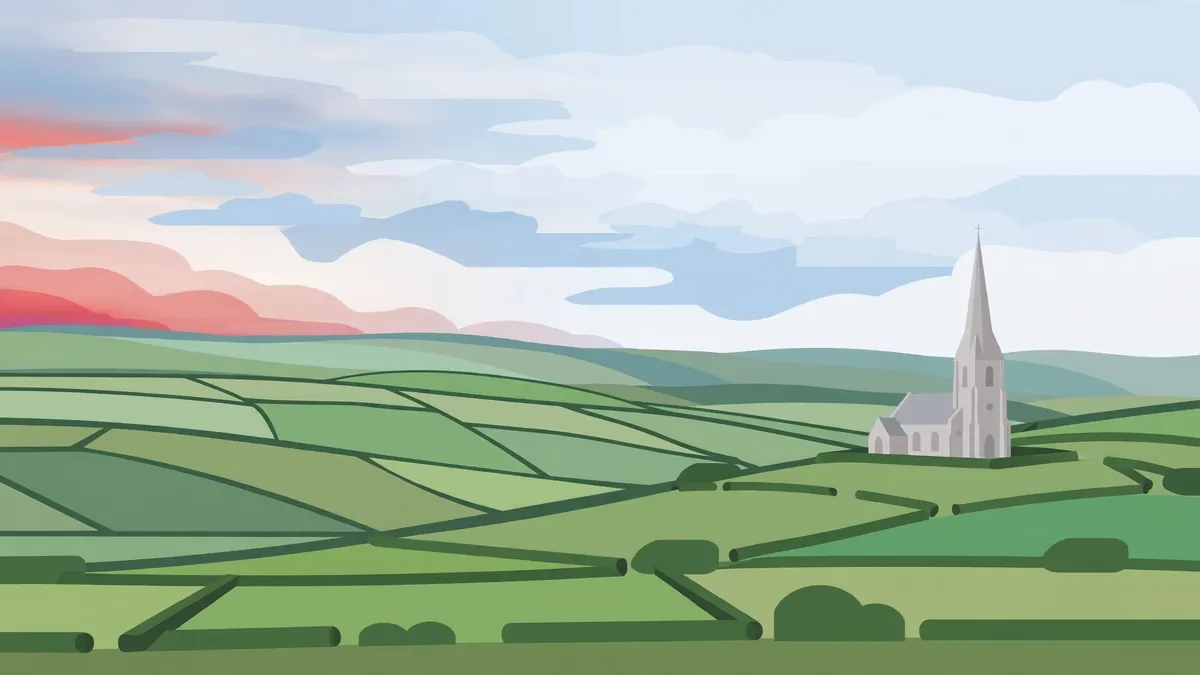
The genealogical record supports him. Samuel Lincoln (1622–1690) emigrated from England — church records in Hingham, Norfolk, document the Lincoln family’s presence there, where they were people of property in the villages of Hingham and Swanton Morley. Samuel landed in Boston on June 20, 1637 (Lincoln’s memory said 1638), and settled in Hingham, Massachusetts — fittingly, a town founded by families from the same Norfolk village. A memorial to the Lincoln family still stands in the village church at Hingham, unveiled by the American ambassador to Britain in 1919, and the family home site at Swanton Morley is commemorated with a plaque.
From Samuel, the Lincolns moved steadily westward and southward over five generations: from Massachusetts to New Jersey to Pennsylvania — where, Lincoln wrote in his 1859 autobiographical sketch, his ancestors “were Quakers” who moved from Berks County, Pennsylvania, to Virginia — and then to Kentucky with his paternal grandfather, Captain Abraham Lincoln. The Captain relocated the family from Rockingham County, Virginia, to Kentucky around 1781–82, seeking open farmland; in 1786, he was killed in a Native American raid while clearing land, leaving six-year-old Thomas Lincoln fatherless.
On his mother’s side, the picture is less certain but points in the same general direction. Nancy Hanks Lincoln — widely believed to be the daughter of Lucy Hanks — came from a family with deep colonial roots. Genealogists have traced the Hanks line, along with connected Virginia families like the Harrisons, to English origins as well, with some researchers identifying additional Scottish, Scotch-Irish, and Welsh threads woven through the maternal ancestry. The surname Lincoln itself derives from the Welsh element lynn (“lake or pool”) and the Latin colonia (“colony”) — a linguistic fossil of Britain’s own layered history.
In modern terms, Lincoln would be described as being of English ethnicity with broader British Isles ancestry — the heritage of the colonial stock that formed the demographic backbone of early America. He was, notably, the first president born outside the original thirteen colonies’ founding generation’s orbit: a westerner, a frontiersman, the product of seven generations of English-descended Americans pushing ever westward.
Family: Parents, Wife, and Children
Thomas Lincoln (1778–1851) was, by his famous son’s account, a man “literally without education” who grew up doing odd jobs in Kentucky and Tennessee after his father’s death. Abraham’s relationship with his father was strained — the ambitious, bookish son chafed at Thomas’s demand that he hire out his labor to neighboring farmers, with Thomas pocketing the wages as the law allowed. Yet Thomas’s restless westward movement gave Abraham the frontier world that made him.
Nancy Hanks Lincoln (1784–1818) remains a somewhat shadowy figure — her exact parentage has been debated by genealogists for over a century, though she is widely accepted as the daughter of Lucy Hanks. What is undisputed is her influence: family tradition holds that she was a deeply religious woman who taught young Abraham his first lessons and instilled the moral seriousness that would define him. Her death when he was nine was the defining trauma of his childhood.
In 1842, Lincoln married Mary Todd, the educated daughter of a wealthy Kentucky family — a union that raised eyebrows, as the Todds were slaveholders and Lincoln was a poor Illinois lawyer. The marriage was passionate and turbulent. They had four sons: Robert Todd Lincoln (1843–1926), the only one to survive to adulthood, who became a successful lawyer, businessman, and U.S. Secretary of War; Edward Baker Lincoln (1846–1850), who died in childhood; William Wallace “Willie” Lincoln (1850–1862), whose death in the White House devastated both parents; and Thomas “Tad” Lincoln (1853–1871), who died at 18.
The Lincoln line ended with Robert’s descendants: the president’s branch is considered extinct since Robert Todd Lincoln Beckwith, his last undisputed direct descendant, died in 1985 without acknowledged children.
Presidency and Legacy
Lincoln’s presidency (1861–1865) preserved the Union, ended slavery in America, and redefined the nation’s purpose. The Emancipation Proclamation of January 1, 1863, declared enslaved people in the rebellious states “forever free”; his tireless advocacy secured the Thirteenth Amendment; and his Second Inaugural Address — “with malice toward none, with charity for all” — remains the gold standard of American political oratory. Historians consistently rank him among the greatest of all American presidents, often at the very top.

There is a quiet irony in the fact that a man of such thoroughly English ancestry became the president who most completely embodied the American idea — that identity is not inherited but chosen, that a rail-splitter’s son could rise to the highest office, and that a nation “conceived in liberty” could be reborn. Lincoln’s English roots gave him his name and his blood; America gave him everything else.
Readers interested in more historical and political figures can explore Peter Orszag and Bayard Martensen, while our profile on Charlie Kirk’s ethnicity covers another prominent political figure. For his full biography, see Abraham Lincoln’s Wikipedia page.
Frequently Asked Questions (FAQ)
What was Abraham Lincoln’s ethnicity?
Abraham Lincoln was of English descent, with additional Scottish, Irish, and Welsh ancestry through his maternal lines. His paternal ancestors emigrated from Norfolk, England, to Massachusetts in the 1630s.
Where did the Lincoln family come from?
The Lincoln family originated in Hingham and Swanton Morley, Norfolk, England. Samuel Lincoln emigrated to Boston in 1637 and settled in Hingham, Massachusetts. The family later moved through New Jersey, Pennsylvania, and Virginia before reaching Kentucky.
Who were Abraham Lincoln’s parents?
His father was Thomas Lincoln, a Kentucky farmer and carpenter, and his mother was Nancy Hanks Lincoln, who died when Abraham was nine. His stepmother, Sarah Bush Johnston Lincoln, helped raise him.
Was Abraham Lincoln related to English nobility?
No. Despite the Norfolk gentry origins sometimes claimed for the early Lincolns, Abraham’s immediate family were humble frontier farmers. Lincoln himself described his parents as being “of undistinguished families — second families, perhaps I should say.”
Are there any living descendants of Abraham Lincoln?
No. The president’s direct line is believed extinct since Robert Todd Lincoln Beckwith, his last undisputed descendant, died in 1985 without acknowledged children.
Conclusion
Abraham Lincoln’s ethnicity — English to the core, with the Scottish, Irish, and Welsh threads common to old colonial families — tells the story of America itself: a Norfolk family crossing an ocean in 1637, pushing west for seven generations, until a log cabin in Kentucky produced the man who would save the Union. From Samuel Lincoln’s Hingham to Abraham Lincoln’s Gettysburg, the journey from English village to American destiny took 226 years — and changed the world.
She holds advanced qualifications in Sociology, Anthropology, and Ethnic Studies, fields that focus on human cultures, traditions, migration patterns, and identity development across the world. Her expertise allows her to break down complex cultural topics into easy-to-understand articles that readers genuinely enjoy.
Over the years, Milana has researched hundreds of public figures, communities, and global ethnic groups, making her a trusted voice in the ethnicity niche. Her writing combines factual research, historical understanding, and modern cultural analysis to ensure every article is informative, reliable, and reader-friendly.
Her work focuses on:
* Ethnicity and ancestry research
* Cultural identity and heritage
* Nationality and family background
* Celebrity ethnicity breakdowns
* Global traditions and multicultural studies
Milana’s goal is to provide readers with authentic, well-researched, and trustworthy information while celebrating the diversity of cultures around the world. Through her detailed research and passion for cultural education, she continues to help audiences better understand ethnicity, heritage, and identity in today’s connected world.
- Larry Ellison Ethnicity: Jewish Mother and Italian Father - October 6, 2026
- Charlie Heaton Ethnicity: Nationality, Parents & Background - October 6, 2026
- Hilaria Baldwin Ethnicity: Heritage, Parents & Background Explained - October 6, 2026