Carlos Scola Pliego: Spanish Filmmaker and Ex-Husband of Sade


Carlos Scola Pliego is a Spanish filmmaker and behind-the-scenes film professional best known to the public as the only man the legendary singer Sade Adu has ever married. The two wed in 1989 and divorced in 1995, but Scola’s career in cinema stretches far beyond that famous marriage — from continuity and assistant-directing work on international productions to directing his own documentaries in Africa.
Quick Facts
| Full name | Carlos Scola Pliego (also credited as Carlos Scola) |
|---|---|
| Known for | Spanish filmmaker; documentary director; ex-husband of singer Sade |
| Spouse / Ex | Sade Adu (married 1989, divorced 1995) |
| Ethnicity / Nationality | Spanish (Southern European), Spanish nationality |
| Children | None publicly documented |
Who Is Carlos Scola Pliego?
Carlos Scola Pliego is a Spanish film director, screenwriter, and production veteran whose name appears in the credits of European and international productions spanning roughly three decades. Film records frequently shorten his name to “Carlos Scola,” while at least one major production credits him under his full name. His résumé lists an unusually wide range of behind-the-camera roles: script supervisor, assistant director, director, writer, producer, and dialogue coach — the mark of a working filmmaker who learned the craft from the ground up rather than entering the industry through fame.
Public interest in Scola has almost always been driven by his marriage to Sade, the Nigerian-born British singer whose smoky voice defined classics like “Smooth Operator” and “The Sweetest Taboo.” Because Sade has spent four decades guarding her privacy fiercely, Scola’s status as her only legally recognized husband has made him a subject of enduring curiosity. But those who look past the headlines find a serious industry craftsman whose credits include a James Bond film, several European features, and two documentaries he wrote and directed himself.
Unlike many people who marry celebrities, Scola never attempted to convert the association into fame. He gave few interviews, made no red-carpet career of the marriage, and after the divorce returned to the quiet professional life he had always preferred.
Early Life and Background
Verified details about Carlos Scola Pliego’s early life are scarce, and readers should treat unsourced claims about his birthplace or education with caution. Some low-quality biography sites assert he was born in the United States, but that claim is unsupported by his career record, which places him squarely inside the Spanish film industry from the very start. What can be established is that he grew up in Spain during a vibrant era of Spanish cinema and developed his skills through hands-on production work.
Scola’s earliest documented credits come from the world of script continuity — the demanding discipline of tracking every visual and dialogue detail so that a film cuts together seamlessly. From there he moved into assistant directing, a role that made him the logistical right hand of directors on Spanish and international sets. It was practical, unglamorous, deeply skilled work, and it put him in rooms with some of the biggest productions of the era.
Carlos Scola Pliego’s Film Career
The clearest consolidated record of Scola’s professional life comes from his IMDb filmography and production records, which trace a career running from the late 1970s through 2007. His assistant-directing credits include Never Say Never Again (1983), the Sean Connery James Bond film, where he worked on Spanish production logistics; Curse of the Pink Panther; the feature Eleni; and the television miniseries Christopher Columbus. These were large, complex shoots, and surviving on them as an assistant director required exactly the organizational precision his continuity background had taught him.
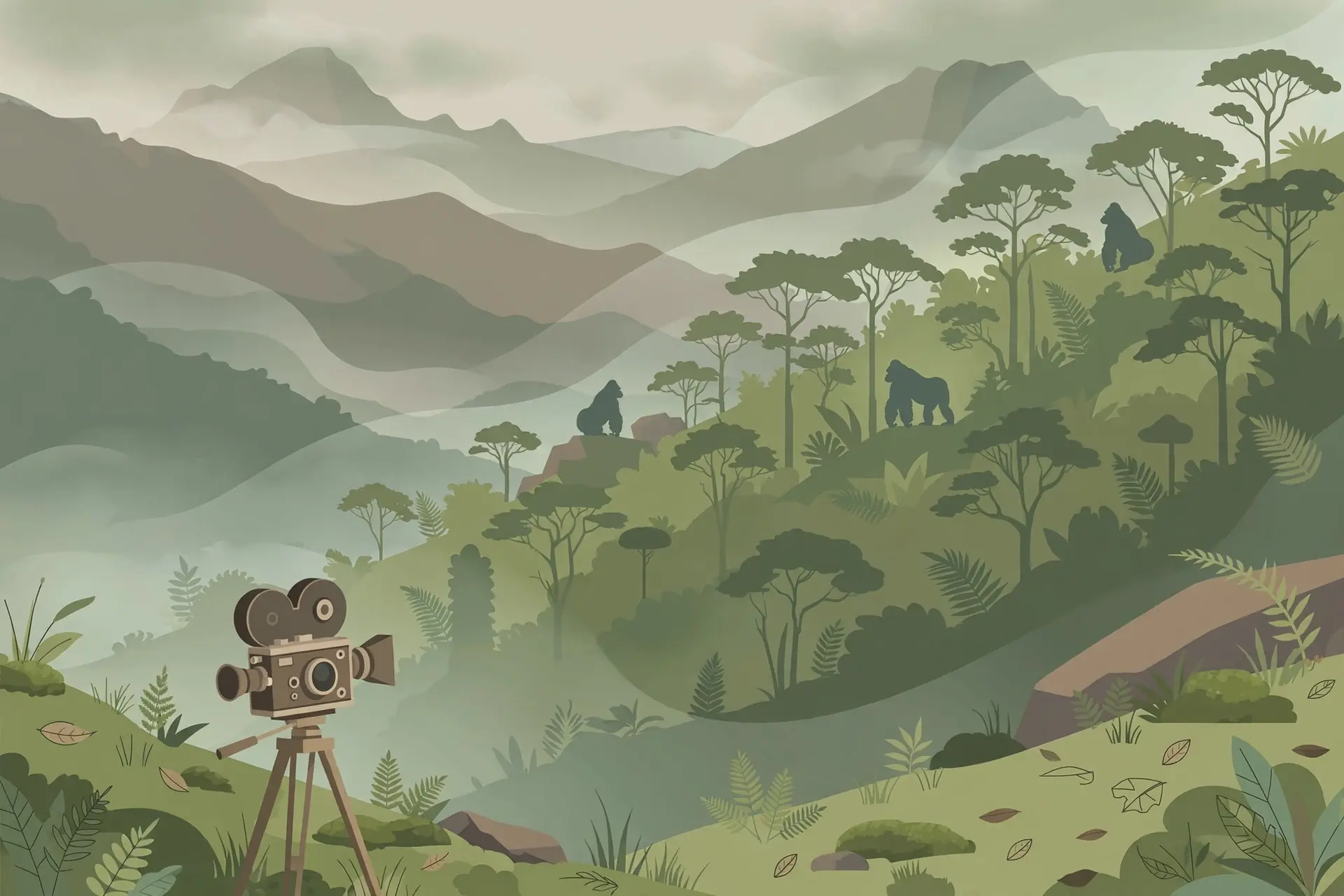
Scola’s most personal credits, however, are the two documentaries he wrote and directed: Ngira: Gorilas en la montaña (1988) and Donde termina el corazón (1989). Both were set in Africa — the first a documentary about mountain gorillas, the second continuing his exploration of the continent. Moving from the machinery of big European productions to self-directed documentary work in Central Africa shows a filmmaker motivated by curiosity and craft rather than status. Documentary production of that kind — small crews, remote locations, wildlife subjects — demands a completely different skill set from studio assistant directing, and Scola evidently possessed both.
His later credits show continued involvement in the industry, including additional crew work on the 2007 sports drama Goal II: Living the Dream. After the mid-2000s, the public trail goes quiet, which is consistent with a career spent in departments — continuity, second unit, dialogue coaching — that rarely attract headlines.
Relationship with Sade
Carlos Scola Pliego met Sade in Spain during the production of music videos for her album Promise, directed by Brian Ward, with Scola working as an assistant director on the videos. What began as a professional collaboration deepened into a personal relationship as Sade spent extended periods in Spain. In 1989, the two married — period descriptions often mention a wedding in a Spanish castle, though the precise venue is not confirmed in the strongest sources, and even the exact date is disputed (IMDb lists one date, Spain’s El País another; Sade’s official biography confirms only the year).
The marriage coincided with a mature stage in both careers. Sade had released three successful albums and was one of the most famous voices in the world; Scola had just completed his transition from assistant director to documentary filmmaker. By all accounts, the Madrid years were deliberately private — the couple lived in Spain, away from the British and American press that hounded Sade elsewhere.
The union lasted until 1995, when the marriage ended in divorce. Neither party has publicly discussed the specific reasons for the split, and in the absence of any firsthand account, responsible coverage treats the causes as private. What is documented is the aftermath: Sade moved to Jamaica, where she began a relationship with music producer Bob Morgan and gave birth to her child, Izaak Theo Adu, in 1996. Scola, for his part, simply withdrew from public view.
Their partnership remains historically notable because of what came after — or rather, what didn’t. Sade has had other significant relationships since, including her long-term partnership with Ian Watts, but Scola remains the only man she has ever legally married. That unique status, combined with the vacuum of information about him, has generated endless low-quality speculation online, from invented birthplaces to fabricated net worth figures. The verifiable record is more ordinary and, in its way, more interesting: two working artists whose paths crossed on a music-video set, married briefly, and parted quietly.
Ethnicity and Nationality
Scola is Spanish by nationality and of Spanish (Southern European) ethnicity. His entire professional career unfolded within the Spanish film industry and its international co-productions, and his name — Scola Pliego — is of Spanish origin. His ex-wife Sade, by contrast, is of Nigerian Yoruba and British heritage, born Helen Folasade Adu in Ibadan, Nigeria, and raised in England. Their marriage was therefore an intercultural one, though neither has ever made it a public talking point.
For readers researching the ethnic backgrounds of celebrity spouses, Scola’s case is straightforward: he is a European Spaniard whose identity is rooted in Spain’s film culture. Like other celebrity ex-partners profiled on this site, such as Antonimar Mello, Harlow Andrus, and Willie Nelson and Angelina Jolie, his public record is best understood through his professional work rather than through ancestry claims that no source supports.
Personal Life: Where Is Carlos Scola Pliego Now?
The honest answer is that no reliable recent source documents Carlos Scola Pliego’s current life. Since his last documented industry credit in 2007, he has maintained complete privacy — no interviews, no social media presence, no confirmed public appearances. This is not evidence of any particular circumstance; it simply means the public record ends where his private life begins, exactly as he appears to have intended.
What is verifiable is that he and Sade had no children together — no source documents any children from the marriage. Claims about his age, wealth, residence, or current projects that circulate on content-farm biography sites should be treated skeptically, as they typically cite no primary sources. The most responsible summary is that Scola is a retired or semi-retired Spanish film professional living a private life, known to history chiefly as Sade’s only husband and, to film-credit readers, as a versatile behind-the-camera craftsman.
For fans of Sade, his story is a reminder of the fiercely guarded private world she built in Spain in the late 1980s — a chapter of her life she has never narrated publicly, leaving the documentary evidence of Scola’s filmography as one of the few concrete traces of those years.

Did Scola and Sade Have Children?
No. There are no publicly documented children from the marriage of Carlos Scola Pliego and Sade Adu. Sade’s only child, Izaak Theo Adu, was born in 1996 from her later relationship with Jamaican music producer Bob Morgan — after her divorce from Scola. This is one of the most frequently asked questions about the couple, and the answer is consistent across every credible source.
Frequently Asked Questions
Who is Carlos Scola Pliego?
He is a Spanish filmmaker and behind-the-scenes film professional — credited variously as an assistant director, script supervisor, director, writer, producer, and dialogue coach — who is publicly known as the ex-husband of singer Sade Adu.
When did Scola marry Sade?
They married in 1989 in Spain. The exact date and venue are disputed across sources, but the year 1989 is confirmed by Sade’s official biography, and the marriage ended in divorce in 1995.
Did he direct a James Bond film?
No. He worked as an assistant director on Spanish production logistics for Never Say Never Again (1983), the Sean Connery Bond film — he did not direct it.
What documentaries did he direct?
He wrote and directed two African-set documentaries: Ngira: Gorilas en la montaña (1988), about mountain gorillas, and Donde termina el corazón (1989).
What is his ethnicity?
He is Spanish by nationality and of Spanish (Southern European) ethnicity, with his entire career rooted in the Spanish film industry.
Conclusion
Carlos Scola Pliego’s life resists the usual celebrity-spouse narrative. He was a working Spanish filmmaker before Sade, a private husband during the marriage, and a private man after it — leaving behind a genuine filmography rather than a tabloid legacy. For a figure so often reduced to a single line in his famous ex-wife’s biography, the credits tell a richer story: three decades of craft, from Bond sets to African mountains, pursued on his own terms.
She holds advanced qualifications in Sociology, Anthropology, and Ethnic Studies, fields that focus on human cultures, traditions, migration patterns, and identity development across the world. Her expertise allows her to break down complex cultural topics into easy-to-understand articles that readers genuinely enjoy.
Over the years, Milana has researched hundreds of public figures, communities, and global ethnic groups, making her a trusted voice in the ethnicity niche. Her writing combines factual research, historical understanding, and modern cultural analysis to ensure every article is informative, reliable, and reader-friendly.
Her work focuses on:
* Ethnicity and ancestry research
* Cultural identity and heritage
* Nationality and family background
* Celebrity ethnicity breakdowns
* Global traditions and multicultural studies
Milana’s goal is to provide readers with authentic, well-researched, and trustworthy information while celebrating the diversity of cultures around the world. Through her detailed research and passion for cultural education, she continues to help audiences better understand ethnicity, heritage, and identity in today’s connected world.
- Larry Ellison Ethnicity: Jewish Mother and Italian Father - October 6, 2026
- Charlie Heaton Ethnicity: Nationality, Parents & Background - October 6, 2026
- Hilaria Baldwin Ethnicity: Heritage, Parents & Background Explained - October 6, 2026