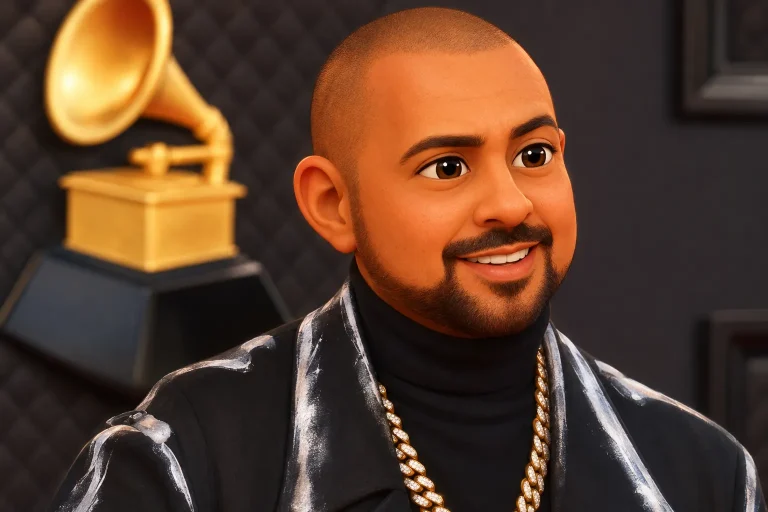
Diego Pavia Ethnicity: His Mexican-American Heritage


Diego Pavia is of Hispanic ethnicity — he is Mexican-American, with his father’s family from Mexico and his mother’s family from Spain. Born in Albuquerque, New Mexico, the former Vanderbilt Commodores quarterback became one of college football’s biggest stars and a 2025 Heisman Trophy finalist, celebrated as the first regular starting quarterback of Hispanic heritage in Vanderbilt history. His pride in his Latino roots, combined with a legendary underdog journey from junior college to the SEC spotlight, made him one of the most beloved players in the sport.
Who Is Diego Pavia?
Diego Pavia is a former college football quarterback best known for his electrifying two seasons at Vanderbilt University (2024–2025). Born on February 16, 2002, in Albuquerque, New Mexico, he attended Volcano Vista High School before playing junior college football at the New Mexico Military Institute, where he won an NJCAA Division I national championship in 2021. He then transferred to New Mexico State (2022–2023), earning Conference USA Offensive Player of the Year honors in 2023, before joining Vanderbilt in January 2024.
At Vanderbilt, Pavia became a sensation. In October 2024, he led the Commodores to a stunning upset of No. 1 Alabama — the program’s first-ever win over a top-five team. In 2025, he put together a historic season: 3,192 passing yards with 27 touchdowns, plus 826 rushing yards and nine more scores, leading Vanderbilt to a 10–2 record, a rivalry win over Tennessee in Knoxville, and a trip to the ReliaQuest Bowl. He finished as the Heisman Trophy runner-up, won the Johnny Unitas Golden Arm Award, was named SEC Offensive Player of the Year and a First-team All-American, and was recognized on the inaugural Hispanic College Football Player of the Year Award watch list. After going undrafted in the 2026 NFL Draft — largely due to concerns about his 5-foot-10 measured height — he signed with the Baltimore Ravens as a free agent.
| Detail | Information |
|---|---|
| Full name | Diego Pavia |
| Date of birth | February 16, 2002 (Albuquerque, New Mexico) |
| Nationality | American |
| Ethnicity | Hispanic — Mexican-American (father’s family from Mexico, mother’s from Spain) |
| Parents | Roel Pavia (father) and Antoinette Padilla (mother) |
| Profession | Former college football quarterback (Vanderbilt) |
Diego Pavia’s Ethnicity Explained
Diego Pavia’s heritage is proudly Hispanic on both sides. According to reporting on his background, his mother Antoinette Padilla’s family hails from Spain, while his father Roel Pavia’s family comes from Mexico — making Diego half-Spanish and half-Mexican, and fully Mexican-American in the identity he claims. He is believed to be the first regular starting quarterback of Hispanic heritage in Vanderbilt’s football history, a milestone in a program dating back to 1890.
His ethnicity became part of a larger story in the 2025 season. When Vanderbilt faced Tennessee in the regular-season finale, it marked the first time in the 133-year rivalry’s history that both teams started Hispanic quarterbacks — Pavia for Vanderbilt and Joey Aguilar (Mexican father, Puerto Rican mother) for Tennessee. Alongside fellow Heisman finalist Fernando Mendoza, who carries Cuban heritage, Pavia represented what commentators called the changing face of college football: a sport increasingly shaped by Latino talent and Latino fans.
For Pavia, his identity was never a marketing angle — it was simply who he is. But its significance was not lost on the Hispanic community, which embraced him as a symbol of what is possible for Latino athletes in a sport where quarterbacks of Hispanic heritage have historically been rare.

Diego Pavia’s Parents and Family Background
Diego was raised in Albuquerque by his mother, Antoinette Padilla, who has been the central figure in his life and career. A single mother, Antoinette raised Diego and his three siblings — older brothers Roel Jr. and Javier, and younger sister Abrielle — largely on her own, making enormous sacrifices to keep the family fed and together. “I didn’t grow up with a whole lot. My mom’s a single mom, and she’s the backbone of our family,” Pavia has said. “When I didn’t have a whole lot, it was like, ‘What’s my way out?'”
Antoinette became something of a celebrity herself during Vanderbilt’s magical 2025 season, her game-day looks making her a viral sensation among Commodores fans. But those who know the family say her real contribution was belief: despite Diego receiving zero Division I offers out of high school, she always insisted he would make it. “I always felt like Diego was going to make it. He was always a warrior,” she said.
His father, Roel Pavia, has remained largely out of the public picture. His younger sister Abrielle, a standout high school basketball player in New Mexico who began drawing college attention as early as eighth grade, is considered the family’s next athletic star — and Diego has taken an active mentoring role, urging her to be “the most competitive person on the court at all times.”
An Underdog Story for the Ages
Pavia’s football journey is the stuff of legend. With no Division I offers, he went the junior-college route at the New Mexico Military Institute, winning a national title in 2021. At New Mexico State, he beat out future Vanderbilt teammate Eli Stowers for the starting job and won CUSA Offensive Player of the Year in 2023. When he followed his coach to Vanderbilt — a program that had long been the SEC’s lovable loser — few expected what came next.
What followed was the greatest two-year run in Vanderbilt football history: the Alabama upset, a 10-win season, a Heisman runner-up finish, and a swagger that transformed the program’s identity. His longtime teammate Stowers, who set a modern tight-end record with a 45.5-inch vertical at the 2026 NFL Combine, spent his media availability advocating for Pavia: “Just look at his production. I think he was the best player in college last year… He will not let anybody outwork him.” Pavia finished his college career with 10,255 passing yards and 88 touchdowns, plus over 3,000 rushing yards and 31 scores on the ground.
What Diego Pavia Has Said About His Heritage
Pavia has spoken about his background with the same directness he brings to the huddle. He has embraced his Hispanic identity publicly, and his presence on the Heisman stage — alongside Mendoza — was widely framed as a breakthrough moment for Latino representation in college football. He has also been candid about the harder parts of his story: growing up without much, being doubted for his size at every level, and fighting his way from JUCO obscurity to the sport’s biggest stages.
“Yeah, my size has been doubted my whole life,” he said at the Senior Bowl. “I feel like the only thing the NFL cares about is can you win, and I view myself as a winner.” That chip-on-the-shoulder mentality — rooted in his upbringing, his mother’s sacrifices, and a lifetime of being overlooked — became his defining trait, and the trait that made him a hero to underdogs everywhere.
Pavia’s Place in Latino Football History
Diego Pavia’s 2025 season landed at a pivotal moment for Latino representation in American football. For decades, the quarterback position — the sport’s most visible and culturally loaded role — has been overwhelmingly white and Black, with Latino players rarely getting opportunities under center. Pavia’s Heisman finalist campaign, alongside Fernando Mendoza’s victory, cracked that ceiling in the most public way possible.
The symbolism was not lost on Latino fans, who turned out in force for Vanderbilt’s magical run. Pavia’s story — the son of a single mother, overlooked by every major program, grinding through junior college to the SEC mountaintop — resonated far beyond ethnicity. But for young Latino quarterbacks who had never seen someone who looked like them competing for the Heisman, his success was something more: proof that the position belongs to anyone with the talent and the toughness to take it. Whatever his NFL future holds, that legacy is secure.
Frequently Asked Questions About Diego Pavia’s Ethnicity
What is Diego Pavia’s ethnicity?
Diego Pavia is Hispanic — specifically Mexican-American. His father’s family is from Mexico and his mother’s family is from Spain.
Where is Diego Pavia from?
He was born and raised in Albuquerque, New Mexico. He attended Volcano Vista High School there before playing junior college ball at the New Mexico Military Institute.
Who are Diego Pavia’s parents?
His mother is Antoinette Padilla, a single mother who raised Diego and his three siblings and became a fan favorite during Vanderbilt’s 2025 season. His father is Roel Pavia, who is not prominently in the public picture.
Was Diego Pavia the first Hispanic quarterback at Vanderbilt?
He is believed to be the first regular starting quarterback of Hispanic heritage in Vanderbilt football history. In November 2025, his matchup with Tennessee’s Joey Aguilar marked the first time both rivals started Hispanic quarterbacks.
What happened to Diego Pavia after college?
After finishing as the 2025 Heisman runner-up, Pavia measured 5-foot-10 at the 2026 NFL Combine and went undrafted, largely due to size concerns. He signed with the Baltimore Ravens as an undrafted free agent in 2026.
Pavia’s rise from overlooked JUCO quarterback to Heisman finalist is an all-time college football story. Readers may also enjoy our profiles of Bayard Martensen and Antonio Mar Mello, and for his fellow 2025 Heisman finalist, see our Fernando Mendoza ethnicity article. More on his background is covered by College Football Network.
She holds advanced qualifications in Sociology, Anthropology, and Ethnic Studies, fields that focus on human cultures, traditions, migration patterns, and identity development across the world. Her expertise allows her to break down complex cultural topics into easy-to-understand articles that readers genuinely enjoy.
Over the years, Milana has researched hundreds of public figures, communities, and global ethnic groups, making her a trusted voice in the ethnicity niche. Her writing combines factual research, historical understanding, and modern cultural analysis to ensure every article is informative, reliable, and reader-friendly.
Her work focuses on:
* Ethnicity and ancestry research
* Cultural identity and heritage
* Nationality and family background
* Celebrity ethnicity breakdowns
* Global traditions and multicultural studies
Milana’s goal is to provide readers with authentic, well-researched, and trustworthy information while celebrating the diversity of cultures around the world. Through her detailed research and passion for cultural education, she continues to help audiences better understand ethnicity, heritage, and identity in today’s connected world.
- Larry Ellison Ethnicity: Jewish Mother and Italian Father - October 6, 2026
- Charlie Heaton Ethnicity: Nationality, Parents & Background - October 6, 2026
- Hilaria Baldwin Ethnicity: Heritage, Parents & Background Explained - October 6, 2026