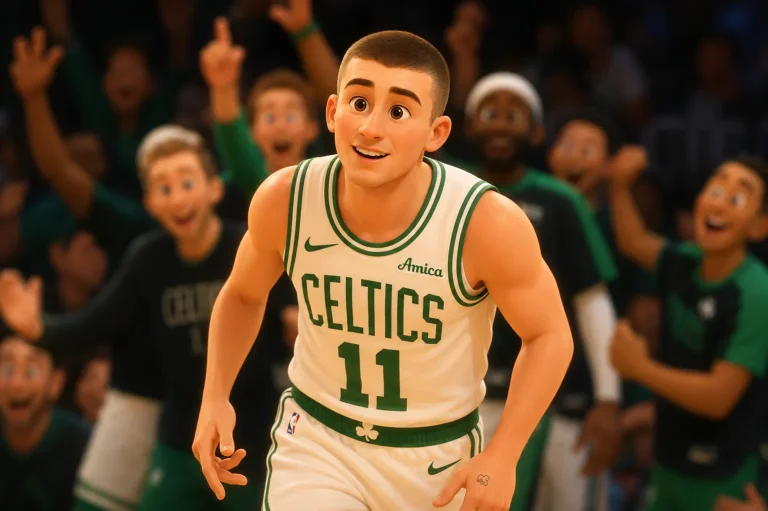
Mack Hollins Ethnicity: African-American Roots


Mack Hollins is African-American. The NFL wide receiver, born on 16 September 1993 in Rockville, Maryland, is the son of Richard and Karyn Hollins and was raised in a football-loving family in the Washington, D.C. suburbs. Some biographical sources describe his background as mixed African-American and German descent — attributing German roots to his mother’s side — but the most consistent reporting identifies him as African-American, and he is widely recognised as one of the league’s prominent Black wide receivers.
Beyond his heritage, Hollins is famous for being one of the NFL’s most colourful personalities: he plays barefoot whenever possible, practises daily affirmations, and built a reputation as an elite special-teams ace before becoming a trusted receiving target. From a Super Bowl LII championship with the Philadelphia Eagles to a veteran leadership role with the New England Patriots, his journey is as unconventional as his lifestyle. This guide covers Mack Hollins’s ethnicity, his family, and his remarkable NFL career.
Quick Facts
| Fact | Detail |
|---|---|
| Full Name | Mack Hollins |
| Date of Birth | 16 September 1993 |
| Place of Birth | Rockville, Maryland, USA |
| Ethnicity | African-American (some sources note German roots on mother’s side) |
| Nationality | American |
| Known For | NFL wide receiver; Super Bowl LII champion; barefoot lifestyle |
Biography and Early Life
Mack Hollins was born on 16 September 1993 in Rockville, Maryland, to Richard and Karyn Hollins, and grew up with two brothers, Brian and Andrew. His father Richard was a former wide receiver at West Virginia University who was drafted by the Detroit Lions before an ACL injury ended his professional hopes — a cautionary tale that Mack absorbed early. Football was the family language: Mack attended Robert Frost Middle School and Thomas S. Wootton High School in Rockville, but received no scholarship offers out of high school.
Undeterred, he spent a postgraduate year at Fork Union Military Academy in Virginia, where he played alongside future Ohio State quarterback Cardale Jones. That season earned him a walk-on opportunity at the University of North Carolina — contingent on him gaining admission academically, which he did. He joined the Tar Heels in 2012, eventually earning second-team All-ACC honours in 2015 and graduating with a degree in sociology.
At 6-foot-4 and 221 pounds, Hollins combined rare size with 4.5-second speed, and his special-teams ferocity made him impossible to ignore. The Philadelphia Eagles selected him in the fourth round (118th overall) of the 2017 NFL Draft. His rise from unrecruited high schooler to NFL draft pick is a testament to persistence — a story that echoes the underdog narratives of other athletes we have covered, such as Denika Kisty, whose basketball family knows the grind of earning a roster spot.

Mack Hollins Ethnicity: African-American Roots
The straightforward answer to “what is Mack Hollins’s ethnicity” is that he is African-American. He was born and raised in Rockville, Maryland, in an African-American family, and his cultural identity is rooted in the Black community of the Washington, D.C. metropolitan area. His parents, Richard and Karyn Hollins, raised Mack and his brothers in Maryland, where the family was known for its warmth, faith, and support of Mack’s career.
A handful of biographical websites describe Hollins as being of mixed African-American and German descent, suggesting German ancestry on his mother Karyn’s side (sometimes rendered as “Karyn Schmitt-Hollins”). However, this claim appears in lower-quality aggregator bios and is not corroborated by major outlets; the more authoritative profiles, including in-depth features on his background, describe both parents as African-American. We present both accounts here because the mixed-heritage claim circulates widely, but readers should know that the best-supported record identifies Hollins as African-American.
What is not in dispute is how Hollins carries himself. He is known for his practice of daily affirmations — his Instagram features videos of him declaring “I am special, I am valuable, I am loved” — and for his community work, including volunteering with the Special Olympics and serving as a global ambassador for charitable organisations. His Wikipedia biography documents his career in detail, while his personality has made him a fan favourite in every locker room he has entered.
Hollins’s story also illustrates how ethnicity is discussed around NFL players: with unusual frequency, fans search for the backgrounds of athletes whose appearance or name sparks curiosity. Similar curiosity drives searches for stars like Dwayne “The Rock” Johnson, whose Samoan and Black heritage is far better documented, and for the sporting families in our profile of Korina Harrison.
Career Highlights
Mack Hollins’s NFL career began with a fairy-tale rookie season: drafted by the Philadelphia Eagles in 2017, he contributed as a receiver and special-teamer on the squad that won Super Bowl LII, earning a championship ring in his first year. After two-plus seasons in Philadelphia, he moved to the Miami Dolphins (2019–2021), where he developed into a core special-teamer and reliable depth receiver.
He then embarked on a journeyman stretch that showcased his value: the Las Vegas Raiders (2022), where he posted career highs in receiving; the Atlanta Falcons (2023); and the Buffalo Bills (2024). In 2025, he signed with the New England Patriots, where his sure hands, elite blocking, and veteran presence made him a trusted target — at one point in the 2025 season, he was one of just two NFL players with zero drops on more than 60 targets.
Off the field, Hollins is genuinely one of a kind. He goes barefoot as often as possible — including arriving at stadiums shoeless — avoids what he considers unnatural products, and approaches life with a free-spirited philosophy that has made him a cult hero. Teammates consistently praise his mentorship of younger receivers, and his longevity — now into his tenth NFL season — speaks to a professionalism that matches his eccentricity.

African-American Identity and the Modern NFL
Mack Hollins’s career unfolds against the backdrop of a league where African-American athletes have shaped the sport’s very identity. Black players make up the majority of NFL rosters, and the wide receiver position — Hollins’s own — has been defined by generations of Black stars, from Jerry Rice to Randy Moss to today’s headliners. Within that context, Hollins is both typical and exceptional: typical in the pipeline that produced him (a football family, the Southern-to-suburban migration patterns of Black American life), exceptional in the personality he brings to it.
His barefoot lifestyle, affirmation practices, and free-spirited philosophy have made him one of the league’s most distinctive characters, and they intersect interestingly with broader currents in Black American culture — from wellness movements to the embrace of individuality as resistance to conformity. Hollins has never framed his quirks in racial terms, but fans have celebrated him as an example of Black athletes refusing to fit moulds, whether on the field or off it.
The Hollins family story is also a classic African-American sports narrative: a father whose own professional dreams were cut short by injury, pouring knowledge into a son who carried the family name further than anyone expected. Richard Hollins’s West Virginia career and Detroit Lions draft selection gave Mack both a blueprint and a warning, and Mack has spoken about the work ethic his parents instilled. That intergenerational transmission of athletic knowledge — fathers coaching sons, mothers holding families together through the grind — is one of the defining patterns of Black American sporting life.
Questions about Hollins’s ethnicity persist partly because of the recurring public fascination with the backgrounds of prominent Black athletes — the same curiosity that drives searches for stars across the league. In Hollins’s case, the answer is straightforward and well documented: he is African-American, born and raised in Maryland, the product of a Black family whose support carried him from unrecruited high schooler to Super Bowl champion. The rumoured German ancestry on his mother’s side remains unverified, but it does not change the core of his identity as he and those around him have described it.
Off the field, Hollins’s individuality has made him one of the NFL’s most beloved figures — the barefoot philosopher of the locker room, dispensing affirmations and life advice to rookies while blocking like a tight end on Sundays. His longevity, now stretching into a tenth NFL season across six franchises, is its own statement: in a league that discards most players within three years, Hollins’s combination of special-teams excellence, reliable hands, and infectious positivity has made him indispensable wherever he lands. Whatever the precise details of his ancestry, his identity — as a Black athlete, a family man, and an unapologetic original — is entirely his own.
Frequently Asked Questions
What is Mack Hollins’s ethnicity?
Mack Hollins is African-American. Some aggregator bios describe him as mixed African-American and German, but the best-supported reporting identifies him as African-American.
What is Mack Hollins’s nationality?
He is American, born on 16 September 1993 in Rockville, Maryland.
Who are Mack Hollins’s parents?
His parents are Richard Hollins, a former West Virginia wide receiver, and Karyn Hollins. He has two brothers, Brian and Andrew.
Why is Mack Hollins famous for being barefoot?
Hollins goes barefoot whenever possible as part of his natural lifestyle philosophy, and has become known for arriving at NFL stadiums without shoes.
Which teams has Mack Hollins played for?
The Eagles (winning Super Bowl LII), Dolphins, Raiders, Falcons, Bills, and Patriots, after playing college football at North Carolina.
She holds advanced qualifications in Sociology, Anthropology, and Ethnic Studies, fields that focus on human cultures, traditions, migration patterns, and identity development across the world. Her expertise allows her to break down complex cultural topics into easy-to-understand articles that readers genuinely enjoy.
Over the years, Milana has researched hundreds of public figures, communities, and global ethnic groups, making her a trusted voice in the ethnicity niche. Her writing combines factual research, historical understanding, and modern cultural analysis to ensure every article is informative, reliable, and reader-friendly.
Her work focuses on:
* Ethnicity and ancestry research
* Cultural identity and heritage
* Nationality and family background
* Celebrity ethnicity breakdowns
* Global traditions and multicultural studies
Milana’s goal is to provide readers with authentic, well-researched, and trustworthy information while celebrating the diversity of cultures around the world. Through her detailed research and passion for cultural education, she continues to help audiences better understand ethnicity, heritage, and identity in today’s connected world.
- Larry Ellison Ethnicity: Jewish Mother and Italian Father - October 6, 2026
- Charlie Heaton Ethnicity: Nationality, Parents & Background - October 6, 2026
- Hilaria Baldwin Ethnicity: Heritage, Parents & Background Explained - October 6, 2026