Marco Rubio Ethnicity: Cuban-American Roots and Family History

Marco Rubio’s ethnicity is Cuban-American. Born Marco Antonio Rubio on May 28, 1971, in Miami, Florida, he is the American-born son of two Cuban immigrants — Mario Rubio Reina and Oriales García Rubio — who left Cuba for the United States in 1956. His recent ancestry is overwhelmingly Spanish, with smaller amounts of Indigenous and African heritage; a DNA test featured on Finding Your Roots put his genetic ancestry at 92.4 percent European, 4.6 percent Native American and 1.6 percent Sub-Saharan African. Rubio grew up speaking Spanish at home in a working-class Cuban household, identifies strongly as Cuban-American, and in 2025 became the 72nd U.S. Secretary of State — the first Latino to hold the office and the highest-ranking Hispanic American official in U.S. history.
Early Life and Biography of Marco Rubio
Marco Antonio Rubio was born in Miami, Florida, the second son and third child of Mario Rubio Reina and Oriales (née García) Rubio. His father worked as a banquet bartender and his mother as a hotel maid, factory worker, cashier and stock clerk — the classic working-class immigrant household that would later become the centerpiece of Rubio’s political story. When Rubio was eight, the family moved to Las Vegas, Nevada, where his parents found work in the hotel industry; during that period the family briefly affiliated with the Church of Jesus Christ of Latter-day Saints. They returned to Miami when he was fourteen, and Rubio re-embraced the Catholic faith that remains central to his life.
Rubio attended South Miami Senior High School, graduating in 1989, where he played football and dreamed of an NFL career. He earned a football scholarship to Tarkio College in Missouri, but an injury and the college’s financial troubles brought him back to Florida. He studied at Santa Fe Community College before earning a Bachelor of Arts in political science from the University of Florida in 1993, and then a Juris Doctor, cum laude, from the University of Miami School of Law in 1996 — accumulating about $100,000 in student loan debt along the way. During law school he worked for Ileana Ros-Lehtinen, the first Cuban-American woman elected to the U.S. House of Representatives.
His political rise was swift: West Miami city commissioner in 1998, Florida House of Representatives in 2000, Speaker of the Florida House in 2006, U.S. Senator from Florida from 2011 to 2025, and a candidate for the Republican presidential nomination in 2016. In January 2025 he was confirmed as Secretary of State, and he has also served as acting national security advisor. He has been married since 1998 to Jeanette Dousdebes Rubio, a former Miami Dolphins cheerleader, with whom he has four children. Readers interested in the personal backgrounds of public officials may also like our profiles of Peter Orszag and Bayard Martensen, and those curious about his family life can read our companion piece on Marco Rubio’s wife’s ethnicity.
Marco Rubio’s Ethnicity: The Direct Answer
Rubio’s ethnicity is firmly Cuban, understood as a national-origin identity within the broader Hispanic/Latino umbrella, with a genetic makeup that is predominantly Southern European. His parents were Cubans of Spanish and Italian descent — at least five of his great-grandparents were born in Spain, and genealogical research on Finding Your Roots traced his family to a landowning line present in Cuba since the 1700s, though more recent generations were working class. His DNA results (92.4% European, 4.6% Native American, 1.6% Sub-Saharan African, 0.2% North African) are typical of many Cubans of colonial Spanish descent, and his matrilineal DNA line is Indigenous — a direct genetic link to the island’s pre-Columbian inhabitants. Ethnicity databases classify him as Cuban with Spanish ancestry plus small amounts of Indigenous and African heritage.
Culturally, Rubio’s Cuban identity was formed at home: Spanish was the household language, Cuban food and traditions were the norm, and his maternal grandfather, Pedro Victor Garcia — with whom Rubio was very close — filled his childhood with stories of Cuba’s descent into communism. That upbringing shaped both his worldview and his political career, from his hawkish stance toward the Cuban and Venezuelan regimes to the “only in America” immigrant narrative at the heart of his campaigns.
That Spanish-dominant upbringing also explains his public persona: Rubio switches effortlessly between English and Spanish in interviews and speeches, and his 2016 presidential campaign and later diplomatic work frequently drew on his ability to speak directly to Spanish-language media. For Cuban-Americans in South Florida — a community where exile identity remains a living political force — his biography resonates as the classic second-generation story: immigrant parents who arrived with little, worked service jobs, and raised a son who reached the highest levels of American government.
Parents and Family: The Cuban Immigration Story
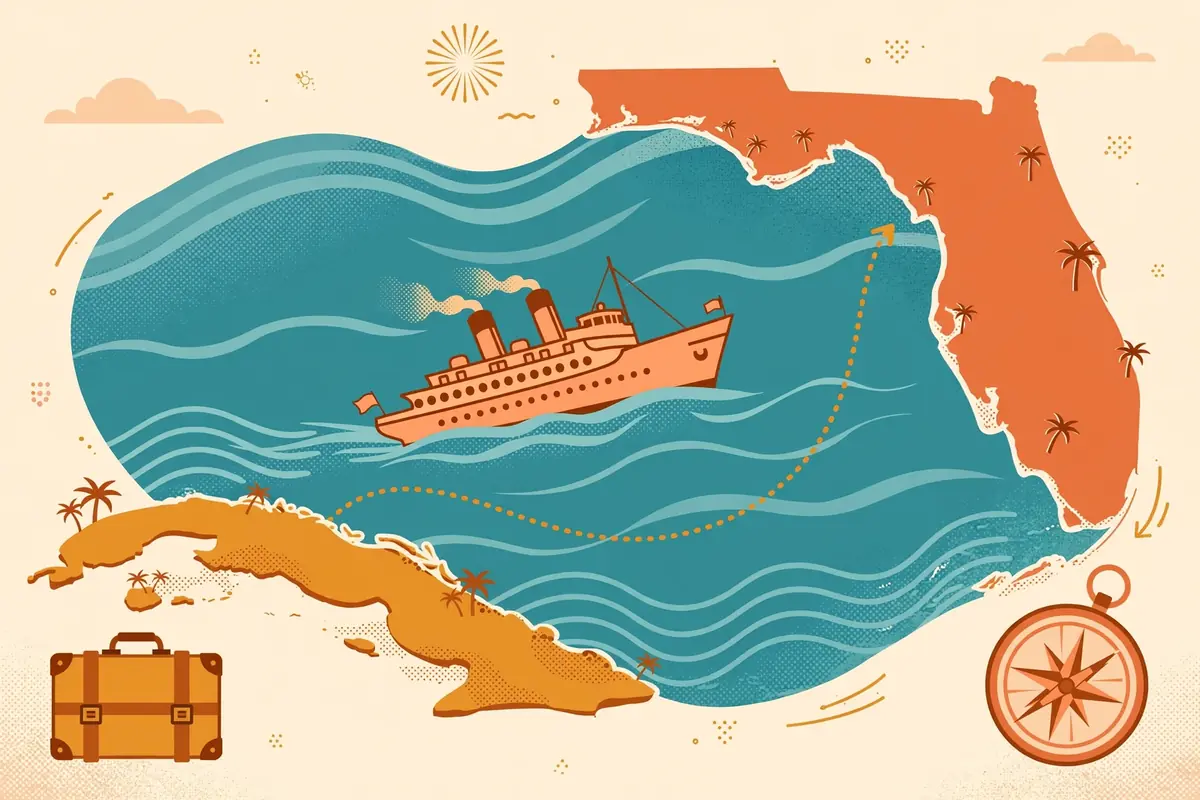
The story of Mario and Oriales Rubio is central to understanding Marco Rubio’s ethnicity — and it carries an important correction to a once-common telling. His parents immigrated to the United States in 1956, during the regime of Fulgencio Batista, two and a half years before Fidel Castro seized power in the Cuban Revolution of 1959. They were economic migrants seeking stability and opportunity amid political uncertainty, not refugees fleeing Castro — a distinction confirmed by immigration records and one Rubio himself has acknowledged. They were not U.S. citizens when Marco was born in 1971; they were naturalized in 1975.
The family maintained ties to the island: Oriales made at least four return trips to Cuba after Castro’s takeover, including a month-long stay in 1961. Rubio’s maternal grandfather, Pedro Victor Garcia, legally immigrated to the U.S. in 1956, returned to Cuba for work in 1959, and fled back in 1962 without a visa — he was detained as an undocumented immigrant and an immigration judge ordered him deported, but officials reversed the decision the same day, reclassifying him as a “parolee.” He gained permanent residency after the Cuban Adjustment Act of 1966. Oriales Rubio died on September 27, 2019, at the age of 88. For a fuller account of his public service career, see Marco Rubio’s Wikipedia biography and the Miller Center’s profile of Marco Rubio.
Career: From Miami to Secretary of State
Rubio’s career is the immigrant-family success story rendered in American politics. After law school and his stint with Ros-Lehtinen, he won a West Miami commission seat in 1998 at age 26. Elected to the Florida House in a 2000 special election, he became majority leader and then, in 2006, Speaker — publishing “100 Innovative Ideas for Florida’s Future” as his governing blueprint. In 2010 he launched a long-shot U.S. Senate campaign against then-Governor Charlie Crist, won the Republican primary and then the general election in a landslide, taking office in January 2011.
In the Senate he became a leading voice on foreign policy, serving as vice chair of the Senate Intelligence Committee and chairing the Small Business Committee, and ran for the 2016 Republican presidential nomination. His legislative focus consistently reflected his heritage: sanctions and pressure campaigns against the Cuban regime, support for Venezuelan opposition figures, and advocacy for Latin American democracy — positions rooted in the stories his grandfather told him about Cuba’s fall to communism. Colleagues on both sides of the aisle have noted that his Cuban-American identity gives him unusual credibility on Western Hemisphere policy. Nominated as Secretary of State in late 2024 and confirmed in January 2025, he is the 72nd person to hold the office and the first Latino to do so — as well as the first Latino to serve as acting national security advisor, making him the highest-ranking Hispanic American official in the nation’s history. Throughout, his Cuban-American identity has been both personal anchor and political signature, connecting him to South Florida’s exile community and to Hispanic voters nationwide, while his fluent Spanish and immigrant-family biography remain among his most recognizable traits on the world stage.
Quick Facts: Marco Rubio
| Detail | Information |
|---|---|
| Full Name | Marco Antonio Rubio |
| Born | May 28, 1971, Miami, Florida, USA |
| Ethnicity | Cuban-American — parents Cuban of Spanish/Italian descent; DNA: 92.4% European, 4.6% Native American, 1.6% Sub-Saharan African |
| Parents | Mario Rubio Reina (bartender) and Oriales García Rubio (hotel maid); immigrated from Cuba in 1956, naturalized 1975 |
| Career | Florida House Speaker (2006–2008), U.S. Senator (2011–2025), 72nd U.S. Secretary of State (2025–present) |
| Family | Married to Jeanette Dousdebes Rubio since 1998; four children |
Frequently Asked Questions About Marco Rubio’s Ethnicity
What is Marco Rubio’s ethnicity?
Marco Rubio is Cuban-American. He was born in Miami to Cuban immigrant parents, and his recent ancestry is predominantly Spanish with smaller amounts of Indigenous and African heritage.
Are Marco Rubio’s parents from Cuba?
Yes. Mario Rubio Reina and Oriales García Rubio were born in Cuba and immigrated to the United States in 1956, during the Batista regime — before Fidel Castro took power in 1959. They became U.S. citizens in 1975.
Did Marco Rubio’s parents flee Castro’s Cuba?
No. Immigration records show they arrived in 1956 as economic migrants, two and a half years before the Cuban Revolution. His mother did make several return trips to Cuba after Castro’s takeover.
What are Marco Rubio’s DNA ancestry results?
On Finding Your Roots (2019), his DNA was reported as 92.4% European, 4.6% Native American, 1.6% Sub-Saharan African, 0.2% North African and 1.2% unmatched, with an Indigenous matrilineal line.
Who is Marco Rubio’s wife?
He has been married since 1998 to Jeanette Dousdebes Rubio, a former Miami Dolphins cheerleader. They have four children together.
She holds advanced qualifications in Sociology, Anthropology, and Ethnic Studies, fields that focus on human cultures, traditions, migration patterns, and identity development across the world. Her expertise allows her to break down complex cultural topics into easy-to-understand articles that readers genuinely enjoy.
Over the years, Milana has researched hundreds of public figures, communities, and global ethnic groups, making her a trusted voice in the ethnicity niche. Her writing combines factual research, historical understanding, and modern cultural analysis to ensure every article is informative, reliable, and reader-friendly.
Her work focuses on:
* Ethnicity and ancestry research
* Cultural identity and heritage
* Nationality and family background
* Celebrity ethnicity breakdowns
* Global traditions and multicultural studies
Milana’s goal is to provide readers with authentic, well-researched, and trustworthy information while celebrating the diversity of cultures around the world. Through her detailed research and passion for cultural education, she continues to help audiences better understand ethnicity, heritage, and identity in today’s connected world.
- Larry Ellison Ethnicity: Jewish Mother and Italian Father - October 6, 2026
- Charlie Heaton Ethnicity: Nationality, Parents & Background - October 6, 2026
- Hilaria Baldwin Ethnicity: Heritage, Parents & Background Explained - October 6, 2026