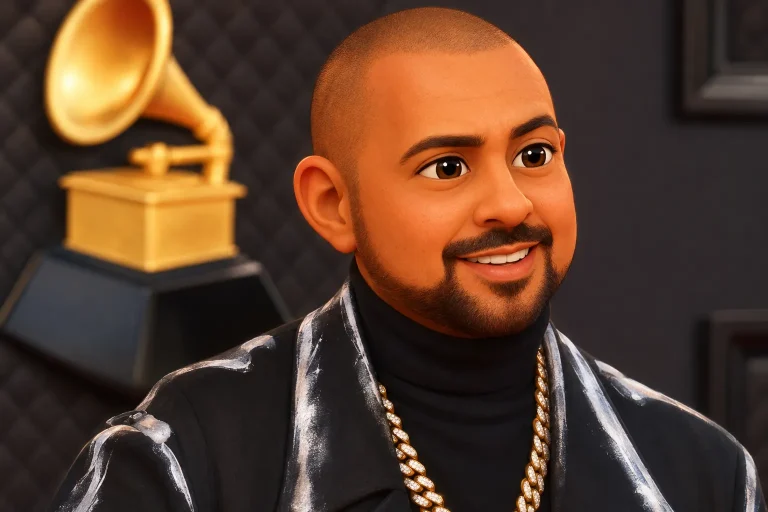
Megan Thee Stallion Ethnicity: Creole Roots


Megan Thee Stallion is African-American with Louisiana Creole heritage. Born Megan Jovon Ruth Pete on 15 February 1995 in San Antonio, Texas, the Grammy-winning rapper has repeatedly described herself as Creole — rapping “He heard I’m Creole, he think I know voodoo” on “Cocky AF” and calling herself a “Creole mami” on “Freak Nasty.” Her paternal grandfather was born in Opelousas, Louisiana, the heart of Creole country, anchoring her family’s roots in the distinctive mixed African, French, and Spanish culture of the Gulf South.
Raised in Houston by her mother, Holly Thomas — herself a rapper who performed as Holly-Wood — Megan grew up steeped in Southern Black culture, from Houston’s rap scene to the traditions of her Louisiana forebears. This guide explores Megan Thee Stallion’s ethnicity in full: her African-American identity, her Creole heritage, her parents’ story, and the career that made her one of hip-hop’s defining stars.
Quick Facts
| Fact | Detail |
|---|---|
| Full Name | Megan Jovon Ruth Pete |
| Stage Name | Megan Thee Stallion |
| Date of Birth | 15 February 1995 |
| Place of Birth | San Antonio, Texas, USA |
| Ethnicity | African-American with Louisiana Creole heritage |
| Known For | Rapper (“Savage”, “WAP”); 3x Grammy winner; “Hot Girl Summer” |
Biography and Early Life
Megan Jovon Ruth Pete was born on 15 February 1995 in San Antonio, Texas, and raised in Houston — first in the South Park neighbourhood, then in Pearland. Her mother, Holly Aleece Thomas, rapped under the name Holly-Wood and would bring young Megan to recording sessions instead of daycare, immersing her in studio culture from childhood. Her father, Joseph Pete Jr., was largely absent during her childhood and died when she was fifteen; her mother, who also served as her manager, died of a brain tumour in March 2019.
Megan began writing raps at sixteen, though her mother asked her to wait until she was twenty-one to pursue rapping seriously. While studying health administration at Prairie View A&M University — later transferring to Texas Southern University, where she earned her bachelor’s degree in 2021 — a video of her freestyling in a campus cypher went viral. She signed with 1501 Certified Entertainment, then 300 Entertainment in 2018, releasing the EPs Tina Snow (2018) and Suga (2020) and the mixtape Fever (2019).
Her nickname “Stallion” comes from Southern slang for a tall, statuesque woman — she stands 5-foot-10 — and her devoted fanbase calls themselves the Hotties. Her Houston upbringing places her in one of hip-hop’s most storied regional scenes, a lineage she shares with fellow Texas rap royalty. Like other artists raised by musical parents, her story parallels the family-driven careers in our profiles of Pele Valentina and Willie Nelson.

Megan Thee Stallion Ethnicity: African-American and Creole Heritage
Megan Thee Stallion’s ethnicity is African-American, with a specifically Louisiana Creole dimension that she embraces openly. Genealogical research traces her paternal grandfather, Joseph Pete, to Opelousas, Louisiana — born to parents who were also Louisiana-born — placing her father’s family squarely in the state’s historic Creole parishes. Creole identity in Louisiana traditionally describes people of mixed African, French, Spanish, and sometimes Native American ancestry, with a distinct language, cuisine, and Catholic-inflected culture.
Megan herself claims the identity without hesitation. Beyond the lyrics in “Cocky AF” and “Freak Nasty,” she has referred to her Creole heritage on social media, and fans have long celebrated it as part of her persona — the “Creole mami” who brings Gulf South flavour to mainstream hip-hop. Her Wikipedia biography documents her Texas birth and Houston upbringing, while genealogical profiles detail the Louisiana roots on her father’s side.
Her mother’s family, the Thomases, were Texas-based for generations — her maternal grandfather Leroy Thomas Jr. was born in San Antonio — giving Megan deep roots in Black Texan culture as well. The combination is potent: Houston rap culture on one side, Louisiana Creole heritage on the other, fused in an artist who proudly centres Black Southern womanhood in everything from her lyrics to her business ventures.
Megan’s embrace of her heritage fits a broader pattern among hip-hop’s biggest stars, for whom regional Black identity — Houston, Atlanta, New Orleans — is a core artistic asset. Comparisons are natural with collaborators like Cardi B, whose own Trinidadian-Dominican background brings a different Caribbean flavour to the same charts Megan dominates.
Career Highlights
Megan Thee Stallion’s mainstream breakthrough came in 2019–2020: “Hot Girl Summer” became a cultural catchphrase, and the “Savage” remix featuring Beyoncé topped the Billboard Hot 100 and won two Grammy Awards. Her feature on Cardi B’s “WAP” (2020) gave her a second chart-topper, and her debut studio album Good News (2020) was a critical and commercial triumph.
At the 63rd Grammy Awards, she became only the second female rapper ever to win Best New Artist, after Lauryn Hill. Follow-up albums Traumazine (2022) and Megan (2024) — the latter featuring “Hiss,” her first solo Hot 100 number one — cemented her status despite a bruising legal battle with her former label. In total, she has won three Grammys, six BET Awards, and numerous other honours, and Time named her one of the 100 most influential people in the world in 2020.
Beyond music, she has built a business empire (including her Hot Girl Productions imprint and brand partnerships), earned her college degree mid-career, launched philanthropic initiatives for Black women’s health and education, and moved into acting — including the 2026 Broadway production of Moulin Rouge! The Musical and her documentary Megan Thee Stallion: In Her Words (2024).

Creole Culture and Southern Hip-Hop
Megan Thee Stallion’s Creole heritage connects her to one of America’s most distinctive regional cultures — and to a hip-hop tradition that has always drawn power from the Gulf South. Louisiana Creole culture, born of the mixing of African, French, Spanish, and Native American peoples under French and Spanish colonial rule, produced its own language (Louisiana Creole French), its own cuisine (gumbo, jambalaya, étouffée), its own music (zydeco), and a Catholic-inflected worldview unlike anything else in the United States. Opelousas, her grandfather’s birthplace, sits in the heart of this world.
That heritage flows directly into her art. Southern hip-hop — from Houston’s chopped-and-screwed pioneers to New Orleans bounce — has always been about regional Black identity asserted loudly and proudly, and Megan is its contemporary queen. Her music’s bounce, its call-and-response energy, its celebration of Black Southern womanhood: all of it rhymes with the cultural confidence of Creole Louisiana, a place where African heritage was never hidden but flamboyantly maintained.
She shares this space with a generation of artists for whom specific Black ethnic identities are central to their brands. Beyoncé — Megan’s “Savage” collaborator and fellow Houstonian — has explored her own Louisiana Creole roots (her mother’s family hails from Louisiana) in work like Lemonade. The throughline is unmistakable: Houston and Louisiana, Creole and Southern, pride as aesthetic.
For fans, Megan’s “Creole mami” persona is more than a catchy lyric — it is an invitation into a culture. Every mention sends listeners down a rabbit hole of discovery: What is Creole? Where is Opelousas? What does that heritage sound like, taste like, feel like? In an era when pop stars are often criticised for cultural vagueness, Megan Thee Stallion’s specificity — African-American, Texan, Creole, Houstonian — is its own kind of power. Her ethnicity is not a footnote to her fame; it is one of its foundations.
In the end, Megan Thee Stallion’s ethnicity story is the story of the modern American South itself: African-American roots running centuries deep, Louisiana Creole culture adding its unmistakable flavour, Texas providing the stage. She carries all of it — the Houston rap lineage, the Opelousas parish heritage, the Black Southern womanhood she champions — into every verse, every business deal, every red carpet. To ask what ethnicity Megan Thee Stallion is, is to be told a story about migration and music, about grandmothers’ kitchens and recording studios, about a culture that survived everything and came out dancing.
Her academic achievement — earning a health administration degree in the middle of a rap career — is part of the same story: a woman who honours her mother’s insistence on education while building an empire on her own terms. Megan Thee Stallion’s heritage and her hustle are inseparable, and both point back to the same source: a family, a city, and a culture that made her.
Frequently Asked Questions
What is Megan Thee Stallion’s ethnicity?
Megan Thee Stallion is African-American with Louisiana Creole heritage, which she references in her music and on social media.
Is Megan Thee Stallion Creole?
Yes — she calls herself Creole. Her paternal grandfather was born in Opelousas, Louisiana, in the heart of Creole country.
What is Megan Thee Stallion’s real name?
Her birth name is Megan Jovon Ruth Pete. She was born on 15 February 1995 in San Antonio, Texas.
Who are Megan Thee Stallion’s parents?
Her mother was Holly Thomas, a rapper known as Holly-Wood who died in 2019; her father was Joseph Pete Jr., who died when Megan was fifteen.
Where is Megan Thee Stallion from?
She was born in San Antonio and raised in Houston, Texas — first in South Park, then in Pearland.
She holds advanced qualifications in Sociology, Anthropology, and Ethnic Studies, fields that focus on human cultures, traditions, migration patterns, and identity development across the world. Her expertise allows her to break down complex cultural topics into easy-to-understand articles that readers genuinely enjoy.
Over the years, Milana has researched hundreds of public figures, communities, and global ethnic groups, making her a trusted voice in the ethnicity niche. Her writing combines factual research, historical understanding, and modern cultural analysis to ensure every article is informative, reliable, and reader-friendly.
Her work focuses on:
* Ethnicity and ancestry research
* Cultural identity and heritage
* Nationality and family background
* Celebrity ethnicity breakdowns
* Global traditions and multicultural studies
Milana’s goal is to provide readers with authentic, well-researched, and trustworthy information while celebrating the diversity of cultures around the world. Through her detailed research and passion for cultural education, she continues to help audiences better understand ethnicity, heritage, and identity in today’s connected world.
- Larry Ellison Ethnicity: Jewish Mother and Italian Father - October 6, 2026
- Charlie Heaton Ethnicity: Nationality, Parents & Background - October 6, 2026
- Hilaria Baldwin Ethnicity: Heritage, Parents & Background Explained - October 6, 2026