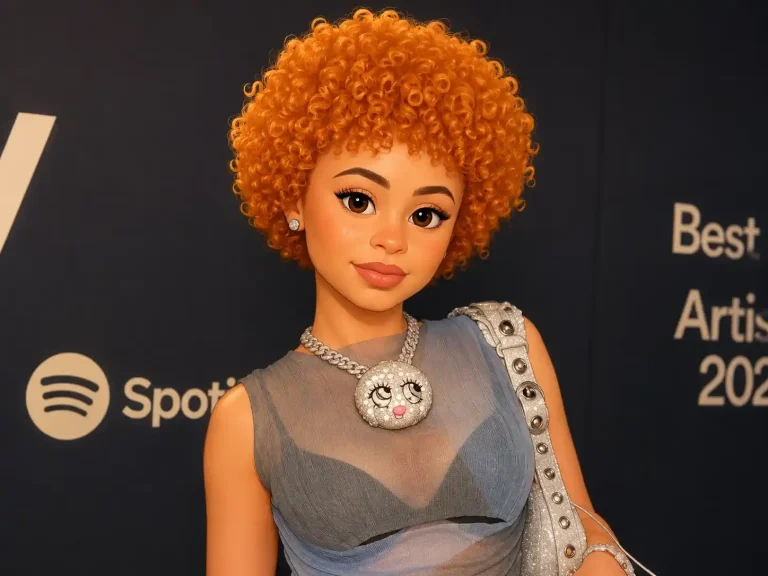
Sara Saffari Ethnicity: The Fitness Star’s Iranian-American Heritage


Sara Saffari is Iranian-American — of Iranian (Persian) descent, born to Iranian immigrant parents in the United States. The fitness influencer and entrepreneur, born February 27, 2001, in Kentucky, has spoken openly about her Iranian heritage and identifies as a first-generation American. Raised in a small town in Eastern Kentucky after losing her father at a young age, Saffari built one of social media’s most recognizable fitness brands — with millions of followers across YouTube, TikTok, and Instagram — by documenting her transformation from battling disordered eating to becoming a strength-training inspiration.
Saffari’s story bridges two worlds: the Persian cultural heritage of her immigrant parents and the Appalachian small-town America where she grew up. This article explores her Iranian ethnicity, her family background, her mental health journey, her rise as a fitness entrepreneur, and the questions fans ask most.
| Detail | Information |
|---|---|
| Full name | Sara Saffari |
| Date of birth | February 27, 2001 |
| Place of birth | Kentucky, USA |
| Ethnicity | Iranian (Persian); Iranian-American |
| Nationality | American |
| Occupation | Fitness influencer, entrepreneur, podcast host |
What Is Sara Saffari’s Ethnicity?
Sara Saffari is of Iranian ethnicity — specifically Persian, the dominant ethnic group of Iran. Multiple biographical sources confirm she was born to Iranian immigrant parents, making her a first-generation Iranian-American. Her nationality is American; she was born in Kentucky and currently resides in Los Angeles, California.
Iranian-Americans form one of the most successful immigrant communities in the United States, numbering over a million people, with major concentrations in Los Angeles (the “Tehrangeles” community), and significant populations across the country. The community is largely the product of post-1979 immigration following the Iranian Revolution, when many educated, professional Iranians emigrated to the West. Saffari’s father was a mathematics professor at a nearby college — a classic profile of the highly educated Iranian immigrant generation.
Saffari has spoken openly about her family’s heritage in interviews, and her cultural background has shaped how she connects with her audience. Growing up Iranian-American in rural Eastern Kentucky — “where everyone knew everyone,” as she has described it — gave her a distinctive bicultural perspective: Persian at home, Appalachian everywhere else.
Family Background: Loss and Resilience
Sara Saffari grew up in a small town in Eastern Kentucky alongside her younger brother, Ali Saffari. Her father, a mathematics professor, passed away when she was very young — a devastating loss that shaped her childhood. Following his death, her mother pursued a master’s degree in occupational therapy to support the family, raising two children as a single parent while advancing her own education.
Saffari has frequently credited her mother and brother as instrumental to her personal development and emotional resilience. The family’s story — an Iranian immigrant mother earning an advanced degree while raising two children alone in rural Kentucky after her husband’s death — is a powerful narrative of perseverance that resonates through Saffari’s content about discipline and mental toughness.
Her parents’ Iranian roots meant Saffari grew up with Persian cultural touchpoints — the food, the family values, the emphasis on education — even as her daily life was thoroughly small-town American. She has described identifying as a first-generation American, carrying the classic second-generation experience of bridging her parents’ culture and her own American upbringing.
Persian Culture and Identity
Persian culture is one of the world’s oldest continuous civilizations, with a heritage stretching back millennia through the Achaemenid, Parthian, and Sassanian empires to modern Iran. Persian identity encompasses the Persian language (Farsi), Nowruz (the Persian New Year), a rich literary tradition (Rumi, Hafez, Ferdowsi), and distinctive culinary traditions.
For Iranian-Americans like Saffari, Persian identity often exists alongside American identity in a comfortable duality — particularly for those, like Saffari, who have described themselves as not particularly religious (raised Christian per some profiles, though she doesn’t practice). This secular, culturally Persian identity is common among younger Iranian-Americans, for whom heritage is expressed through family, food, language fragments, and values rather than religious observance.
Saffari’s openness about her Iranian background has made her a relatable figure for Middle Eastern and Muslim-adjacent audiences in the fitness space — a realm where Iranian-American women are underrepresented as public figures. Her success offers visibility to a community often stereotyped or overlooked in mainstream American media.

From Eating Disorder to Fitness Inspiration
Saffari’s fitness journey began from a place of struggle. During her teenage years, she battled anxiety, depression, and a severe eating disorder, at one point dropping to around 100 pounds. She has described wearing baggy clothes to hide her frame and feeling sickly and unconfident. “I was really skinny. I weighed like 100 pounds and I wasn’t eating, so I wanted to put on weight and I wanted it to not just be fat,” she has said.
In April 2021, she began training at the gym as a way to manage her mental health. The physical transformation came quickly — but more importantly, so did the psychological one. She started sharing her journey on Instagram and TikTok in 2020, and a situational comedy video about dating and relationships went viral in December 2021, dramatically accelerating her growth.
What differentiated Saffari in the crowded fitness-influencer space was tone: her videos felt observational and relatable rather than authoritative. She wasn’t a certified expert lecturing from above but a young woman documenting her own progress — inviting viewers to follow along as she learned. Combined with her deadpan comedy sketches, this authenticity built a loyal audience: over 2.5 million YouTube subscribers, millions more on TikTok and Instagram.
Education and Business Empire
Before fitness fame, Saffari was on a conventional path: she worked restaurant and retail jobs and pursued higher education, graduating from California Lutheran University with an MBA in 2023. Her business education has been instrumental in managing her brand — she approaches influencing as an enterprise, not just a hobby.
Her business portfolio includes brand ambassadorships with Raw Nutrition, Gymshark, Raw Gear, and Gorilla Mind; the Saffari Club App, a subscription fitness platform offering workout programs and nutrition guidance; and the popular podcast Mommy And Daddy Talk, co-hosted with fellow fitness creator Bradley Martyn since August 2023. She launched her YouTube channel in April 2022, adding long-form content to her short-form dominance.
The MBA-to-influencer pipeline reflects her Iranian-American heritage in an interesting way: Persian culture places enormous value on education, and Saffari’s completion of a master’s degree even as her influencing career took off honors that value while she simultaneously built a thoroughly modern digital business.
Mental Health Advocacy
Saffari’s candor about anxiety, depression, and disordered eating has made her an important voice in fitness-community mental health conversations. In an industry often criticized for promoting unhealthy body standards, her story runs the other direction: from dangerously underweight to strong, with the gym as therapy rather than punishment.
She speaks about the gym as the tool that helped her manage her mental health — a message that resonates with young women navigating similar struggles. Her content balances workout instruction with lifestyle comedy and honest discussion of setbacks, creating a community organized around progress rather than perfection.
For more celebrity background stories, explore Ramtin Abdolmajid and Mallory Plotnik on MyEthnicity.

Iranian-Americans in Fitness and Digital Media
Sara Saffari belongs to a growing cohort of Iranian-American creators reshaping digital media. The Iranian diaspora in the United States — concentrated in Los Angeles but spread nationwide — has produced prominent figures in tech, medicine, and entertainment, yet fitness influencing remains a newer frontier. Saffari’s visibility matters because representation in wellness spaces has historically skewed toward a narrow demographic, and her presence offers Iranian-American and Middle Eastern young women a relatable figure whose background mirrors their own bicultural experience.
Her content also reflects values often associated with immigrant families: relentless work ethic, discipline, and the conversion of personal adversity into achievement. The daughter of a mathematics professor and an occupational therapist, Saffari embodies the Iranian-American community’s well-documented emphasis on education — she completed her MBA even as her influencing career exploded — while simultaneously pioneering a career path her parents’ generation could hardly have imagined. That duality, Persian values expressed through an all-American digital medium, is central to her appeal.
Moreover, her openness about mental health challenges carries particular resonance within communities where such struggles have historically been stigmatized. By speaking candidly about anxiety, depression, and disordered eating, Saffari models a healthier relationship with vulnerability for audiences who may not see it reflected in their own families’ approach to emotional difficulty.
Frequently Asked Questions
What is Sara Saffari’s ethnicity?
Sara Saffari is Iranian-American — of Iranian (Persian) descent, born in Kentucky to Iranian immigrant parents. She identifies as a first-generation American.
Where was Sara Saffari born?
Saffari was born on February 27, 2001 (some sources say February 28), in Eastern Kentucky, USA. She grew up in a small Appalachian town and now lives in Los Angeles, California.
What happened to Sara Saffari’s father?
Her father, a mathematics professor, passed away when Sara was very young. Her mother then earned a master’s degree in occupational therapy and raised Sara and her younger brother as a single parent.
How did Sara Saffari become famous?
She began posting gym content on TikTok in March 2020, documenting her fitness transformation after struggling with an eating disorder. A comedy video about dating went viral in December 2021, and she launched her YouTube channel in April 2022. She now has millions of followers and co-hosts the Mommy And Daddy Talk podcast with Bradley Martyn.
What is Sara Saffari’s education?
She graduated from California Lutheran University with an MBA in 2023, and attended Adolfo Camarillo High School, where she played basketball and ran track.
For more on her background, see this in-depth Sara Saffari biography.
She holds advanced qualifications in Sociology, Anthropology, and Ethnic Studies, fields that focus on human cultures, traditions, migration patterns, and identity development across the world. Her expertise allows her to break down complex cultural topics into easy-to-understand articles that readers genuinely enjoy.
Over the years, Milana has researched hundreds of public figures, communities, and global ethnic groups, making her a trusted voice in the ethnicity niche. Her writing combines factual research, historical understanding, and modern cultural analysis to ensure every article is informative, reliable, and reader-friendly.
Her work focuses on:
* Ethnicity and ancestry research
* Cultural identity and heritage
* Nationality and family background
* Celebrity ethnicity breakdowns
* Global traditions and multicultural studies
Milana’s goal is to provide readers with authentic, well-researched, and trustworthy information while celebrating the diversity of cultures around the world. Through her detailed research and passion for cultural education, she continues to help audiences better understand ethnicity, heritage, and identity in today’s connected world.
- Larry Ellison Ethnicity: Jewish Mother and Italian Father - October 6, 2026
- Charlie Heaton Ethnicity: Nationality, Parents & Background - October 6, 2026
- Hilaria Baldwin Ethnicity: Heritage, Parents & Background Explained - October 6, 2026