What Ethnicity Is Shakira? Her Lebanese and Colombian Roots Explained


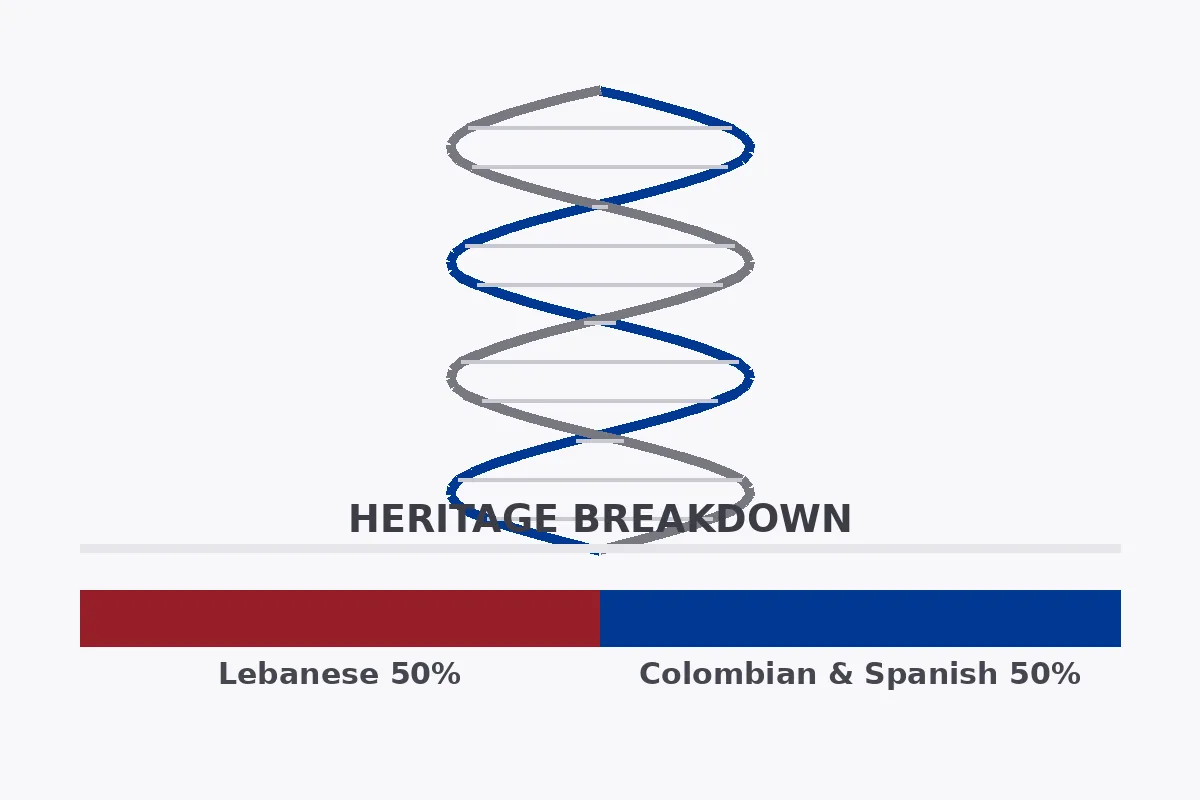
Shakira is of mixed ethnicity — Lebanese on her father’s side and Colombian (with Spanish, Catalan, and distant Italian roots) on her mother’s side. Born Shakira Isabel Mebarak Ripoll on February 2, 1977, in Barranquilla, Colombia, the “Queen of Latin Music” is the daughter of William Mebarak Chadid, who was born in New York City to a Lebanese family from Zahle, Lebanon, and Nidia Ripoll Torrado, a Colombian of Spanish and Catalan descent. The question “what ethnicity is Shakira” has fascinated fans for decades, because her music, dance, and identity fuse Latin American and Middle Eastern cultures into something entirely her own.
That fusion is no accident. Shakira has often credited her Lebanese father with introducing her to Arabic music and belly dancing — the hip-shaking performance style that became her global trademark — while her Colombian upbringing immersed her in Latin rhythms, cumbia, and vallenato. The result is a sound critics describe as a blend of pop, rock, Latin, and Middle Eastern influences, sung in Spanish, English, Portuguese, and Arabic phrases.
This guide answers “what ethnicity is Shakira” completely: her parents’ origins, the Lebanese and Spanish threads in her family tree, and how her multicultural heritage shaped her art.
Quick Facts: Shakira
| Detail | Fact |
|---|---|
| Full Name | Shakira Isabel Mebarak Ripoll |
| Date of Birth | February 2, 1977 |
| Birthplace | Barranquilla, Colombia |
| Nationality | Colombian |
| Ethnicity | Lebanese (father) and Colombian/Spanish/Catalan (mother), distant Italian roots |
| Profession | Singer, songwriter, dancer, producer |
Early Life and Background
Shakira Isabel Mebarak Ripoll was born in Barranquilla, a city on Colombia’s northern Caribbean coast, as the only child of William Mebarak Chadid and Nidia Ripoll Torrado. She has eight older half-siblings from her father’s previous marriage. Raised Catholic, she attended Catholic schools and grew up in reasonably comfortable circumstances — her father worked as a jeweler — until he went bankrupt when she was eight, a shock that forced the family to adjust to a leaner reality.
Her talent appeared astonishingly early. She wrote her first poem, “La Rosa de Cristal” (“The Crystal Rose”), at age four, and composed her first song, “Tus Gafas Oscuras” (“Your Dark Glasses”), at eight — inspired by her father, who wore dark glasses for years while grieving the death of his son, Shakira’s half-brother, in a motorcycle accident when she was two. A local choir director once rejected her from the school choir, reportedly saying her voice “sounded like a goat” because of its strong vibrato — a rejection that became one of pop music’s great ironies.
At 13, she signed with Sony Music Colombia. Her first two albums, Magia (1991) and Peligro (1993), sold modestly, but after finishing high school she roared back with Pies Descalzos (1995) and Dónde Están los Ladrones? (1998), which made her a star across the Spanish-speaking world. Her English-language crossover, Laundry Service (2001), featuring “Whenever, Wherever,” made her a global phenomenon — and the best-selling Colombian artist of all time.
Shakira’s Ethnicity: Lebanese Father, Colombian-Spanish Mother
What ethnicity is Shakira, in detail? Her father, William Mebarak Chadid, was born in New York City to Lebanese parents whose family came from Zahle, in Lebanon’s Beqaa Valley; the family moved to Colombia when he was a child. Her mother, Nidia del Carmen Ripoll Torrado, is Colombian, born in Barranquilla, with ancestry that includes Spanish (Castilian, Andalusian, and other regional lines), Catalan, and — through an ancestor surnamed Pisciotti — distant Italian roots. Genealogical summaries also note possible Indigenous and African threads in the broader Colombian mix, typical of the Caribbean coast’s blended population.
The name “Shakira” itself is Arabic — from shākirah (شاكرة), meaning “grateful” or “thankful” — reportedly chosen in honor of her paternal grandmother. It is a fitting emblem of the Lebanese half of her identity, which Shakira has embraced openly throughout her career. She has described herself as “a fusion between black and white, between pop and rock, between cultures,” and that self-description is literal: her art draws simultaneously on Arab melodic modes, Latin percussion, Andean instrumentation, and Anglo-American pop-rock.
The Lebanese influence is most visible in her dance. The belly dancing — more precisely, the Turkish-Arabic dance vocabulary — that electrified audiences in “Whenever, Wherever,” “Hips Don’t Lie,” and her legendary Super Bowl LIV halftime show came directly from the Arabic music her father played at home. Songs like “Ojos Así” explicitly weave Arabic scales and instrumentation into Latin pop. Meanwhile, her Colombian side grounds her in cumbia, vallenato, and champeta — the Caribbean coastal sounds of Barranquilla, a port city itself shaped by Lebanese, Italian, and other immigrant communities. She literally grew up, as she has said, among the Lebanese and Italian communities of Barranquilla.
Shakira’s mixed heritage also made her a natural global citizen: a Spanish-speaking Colombian with an Arabic name, Lebanese family, Catalan ex-partner (footballer Gerard Piqué, father of her two sons Milan and Sasha), and years lived in Barcelona and Miami. For more Latin music background stories, see our profiles of Rouba Saadeh and Carolin Bacic, and our companion piece on Shakira ethnicity.
Family: Parents, Siblings, and Children
Shakira is the only child of her parents’ marriage but has eight older half-siblings from her father’s previous marriage, making for a large extended family. Her father’s grief over losing a son in a motorcycle accident — the event behind her first song — remained a defining family memory throughout her childhood.
From 2011 to 2022, Shakira was in a relationship with Catalan professional footballer Gerard Piqué, with whom she has two sons: Milan Piqué Mebarak (born 2013) and Sasha Piqué Mebarak (born 2015). The children’s heritage is a remarkable tapestry: Lebanese-Colombian-Spanish on their mother’s side and Catalan Spanish on their father’s. The couple’s separation in 2022 was one of the most covered celebrity splits of the decade, followed by Shakira’s chart-topping “BZRP Music Sessions, Vol. 53,” which turned heartbreak into a record-breaking hit.
Shakira is also said to be distantly related to Lebanese singer and performer Carole Samaha — another small thread tying her to the Lebanese artistic world her father’s family came from.

Career, Philanthropy, and Cultural Impact
With over 100 million records sold, multiple Grammy and Latin Grammy Awards, and hits spanning three decades — “Whenever, Wherever,” “Hips Don’t Lie,” “Waka Waka (This Time for Africa),” “Chantaje,” “TQG” — Shakira is one of the best-selling music artists of all time and the best-selling female Latin artist in history. Her 2020 Super Bowl halftime performance with Jennifer Lopez was celebrated as a landmark moment for Latino representation in American pop culture.
Beyond music, her Pies Descalzos Foundation — named after her breakthrough album — has built schools for disadvantaged children across Colombia for nearly three decades, and she has served as a UNICEF Goodwill Ambassador. Her philanthropy, like her music, reflects the Barranquilla upbringing that showed her both Caribbean vibrancy and economic disparity up close.
Culturally, Shakira normalized the very idea of the hyphenated global pop star: she proved that an artist could sing in Spanish, dance to Arabic rhythms, and dominate English-language charts without diluting any part of her identity. In doing so, she became a hero to hyphenated kids everywhere — Lebanese-Colombians, Arab-Latinos, and every child of mixed heritage told they had to choose. For the documented details of her life and career, see Shakira’s Wikipedia biography.
Language, Dance, and the Barranquilla Sound
Shakira’s ethnicity lives in her art as much as in her genealogy. Listen closely to her catalog and you hear the fusion made audible: the Arabic-influenced vocal melisma and belly-dance rhythms inherited from her Lebanese father’s musical world; the cumbia, vallenato, and champeta of her Barranquilla childhood; the rock guitars of her adolescence; and the polished Anglo-American pop of her crossover years. Songs like “Ojos Así” braid Arabic scales directly into Latin pop, while “Waka Waka” channeled Cameroonian makossa through a Colombian-Lebanese prism for a global audience of billions.
Her dance vocabulary tells the same story. The hip movements that became her signature are rooted in the Arabic dance traditions her father introduced her to as a child in Barranquilla — she has said she would perform her “belly dancer” routine for classmates every Friday at school. Fusing that with Latin choreography created a stage language no one had seen before: unmistakably Arab, unmistakably Latina, unmistakably Shakira.
Barranquilla itself deserves credit. The Caribbean port city has hosted Lebanese, Italian, and other immigrant communities for over a century, making it one of Colombia’s most cosmopolitan cities — the ideal incubator for a Lebanese-Colombian artist. Shakira didn’t just inherit two cultures; she grew up in a city where their fusion was the local reality. Her global success proved that audiences everywhere were hungry for exactly that blend.
Frequently Asked Questions (FAQ)
What ethnicity is Shakira?
Shakira is of mixed ethnicity: Lebanese on her father’s side and Colombian (with Spanish, Catalan, and distant Italian ancestry) on her mother’s side.
Is Shakira Lebanese?
Yes, half Lebanese. Her father, William Mebarak Chadid, was born in New York to Lebanese parents from Zahle, Lebanon. Shakira’s first name is Arabic, meaning “grateful,” and she has embraced her Lebanese heritage throughout her career.
Is Shakira Latina?
Yes. Shakira was born and raised in Barranquilla, Colombia, to a Colombian mother, and she is celebrated as the “Queen of Latin Music.” Her identity fuses Latin American and Middle Eastern cultures.
What does the name Shakira mean?
Shakira comes from the Arabic word shākirah (شاكرة), meaning “grateful” or “thankful.” She was reportedly named after her paternal grandmother.
Where was Shakira born?
Shakira Isabel Mebarak Ripoll was born on February 2, 1977, in Barranquilla, Colombia, on the country’s northern Caribbean coast.
She holds advanced qualifications in Sociology, Anthropology, and Ethnic Studies, fields that focus on human cultures, traditions, migration patterns, and identity development across the world. Her expertise allows her to break down complex cultural topics into easy-to-understand articles that readers genuinely enjoy.
Over the years, Milana has researched hundreds of public figures, communities, and global ethnic groups, making her a trusted voice in the ethnicity niche. Her writing combines factual research, historical understanding, and modern cultural analysis to ensure every article is informative, reliable, and reader-friendly.
Her work focuses on:
* Ethnicity and ancestry research
* Cultural identity and heritage
* Nationality and family background
* Celebrity ethnicity breakdowns
* Global traditions and multicultural studies
Milana’s goal is to provide readers with authentic, well-researched, and trustworthy information while celebrating the diversity of cultures around the world. Through her detailed research and passion for cultural education, she continues to help audiences better understand ethnicity, heritage, and identity in today’s connected world.
- Larry Ellison Ethnicity: Jewish Mother and Italian Father - October 6, 2026
- Charlie Heaton Ethnicity: Nationality, Parents & Background - October 6, 2026
- Hilaria Baldwin Ethnicity: Heritage, Parents & Background Explained - October 6, 2026