15 Types of Buildings Explained: Complete Developer Guide (2026)

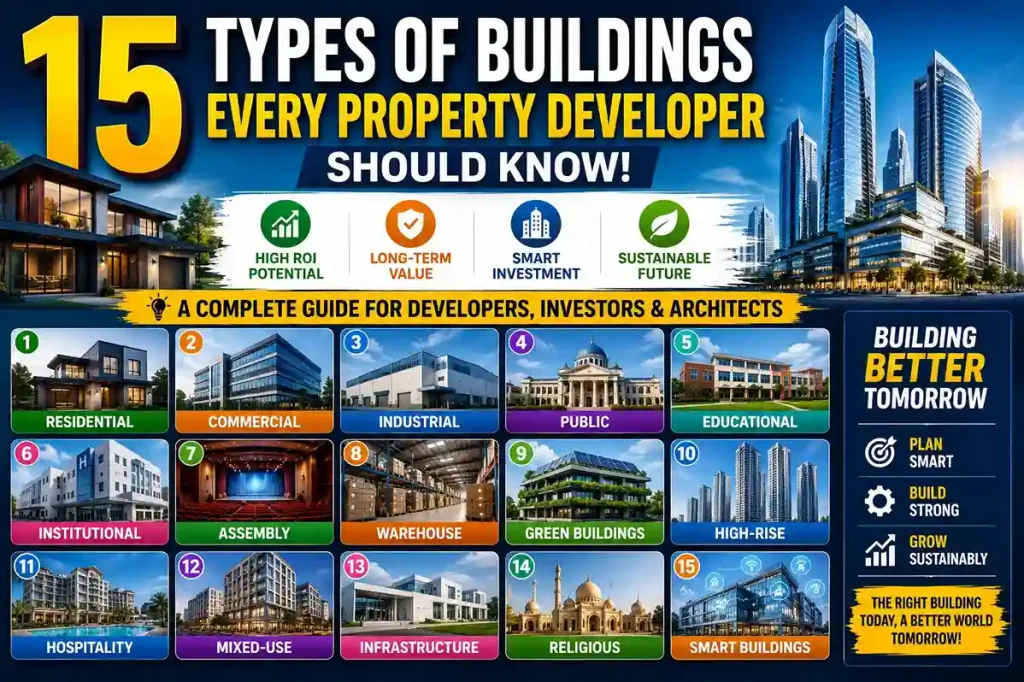
Introduction
Whether you’re a property developer, architect, investor, or construction professional, understanding the different types of buildings is essential before starting any project.
Every building serves a unique purpose, follows different building codes, requires specific construction methods, and offers varying levels of profitability.
From residential housing developments and office complexes to warehouses, hospitals, and modern mixed-use skyscrapers, selecting the right building type can significantly impact project success and return on investment.
This guide explores the most important building types, their uses, benefits, construction requirements, and future trends shaping the real estate industry in 2026.
Quick Comparison Table
| Building Type | Primary Use | Investment Potential |
|---|---|---|
| Residential | Living Spaces | High |
| Commercial | Business Activities | Very High |
| Industrial | Manufacturing & Storage | High |
| Educational | Learning Facilities | Medium |
| Healthcare | Medical Services | High |
| Mixed-Use | Multiple Functions | Very High |
| Green Buildings | Sustainable Development | Growing Rapidly |
| High-Rise | Urban Density | Premium |
1. Residential Buildings
Residential buildings are designed primarily for people to live in.
Common Examples
- Single-family homes
- Apartments
- Condominiums
- Townhouses
- Duplexes
Advantages
- Consistent demand
- Long-term appreciation
- Stable rental income
Challenges
- Maintenance costs
- Tenant management
- Local zoning regulations
2. Commercial Buildings
Commercial properties support business activities.
Examples
- Office buildings
- Shopping centers
- Retail stores
- Business parks
Why Developers Like Them
Commercial buildings often generate higher rental income than residential properties.
3. Industrial Buildings
Industrial facilities support manufacturing, production, and logistics.
Examples
- Factories
- Distribution centers
- Warehouses
- Processing plants
Growing Trend
E-commerce growth has dramatically increased demand for industrial properties.
4. Educational Buildings
Educational facilities support learning and research.
Examples
- Schools
- Universities
- Colleges
- Training centers
Design Priorities
- Safety
- Acoustics
- Natural lighting
- Flexible learning spaces
5. Healthcare Buildings
Healthcare facilities require highly specialized construction.
Examples
- Hospitals
- Clinics
- Medical centers
- Rehabilitation facilities
Key Features
- Advanced HVAC systems
- Emergency infrastructure
- Strict regulatory compliance
6. Government and Public Buildings
Public buildings serve communities and government operations.
Examples
- Courthouses
- Libraries
- City halls
- Museums
7. Hospitality Buildings
Tourism continues to drive demand for hospitality developments.
Examples
- Hotels
- Resorts
- Motels
- Vacation rentals
Revenue Potential
High occupancy locations can generate substantial returns.
8. Mixed-Use Buildings
One of the fastest-growing building categories.
Examples
A single building may contain:
- Retail stores
- Apartments
- Offices
- Restaurants
Benefits
- Multiple income streams
- Increased property value
- Efficient land use
9. Warehouse Buildings
Warehouse demand has exploded due to online shopping.
Types
- Distribution centers
- Fulfillment centers
- Cold storage facilities
10. Green Buildings
Green construction focuses on sustainability.
Features
- Solar panels
- Rainwater harvesting
- Smart energy systems
- Sustainable materials
Benefits
- Lower operating costs
- Reduced environmental impact
- Higher property value
11. High-Rise Buildings
High-rise buildings maximize urban land use.
Examples
- Skyscrapers
- Luxury apartment towers
- Corporate headquarters
Construction Challenges
- Wind resistance
- Fire safety systems
- Structural engineering
12. Assembly Buildings
Assembly structures accommodate large gatherings.
Examples
- Stadiums
- Theaters
- Convention centers
13. Institutional Buildings
Institutional buildings provide public services.
Examples
- Nursing homes
- Correctional facilities
- Government housing
14. Religious Buildings
Places of worship require unique architectural considerations.
Examples
- Churches
- Mosques
- Temples
- Synagogues
15. Smart Buildings
Smart buildings represent the future of construction.
Technologies
- IoT sensors
- Automated lighting
- Smart security systems
- AI-powered energy management
Why They Matter
Smart buildings reduce costs and improve operational efficiency.
Building Trends Shaping 2026
Sustainable Construction
Developers increasingly prioritize eco-friendly materials and energy-efficient designs.
Modular Construction
Faster construction timelines and lower labor costs are driving adoption.
AI and Smart Technology
Artificial intelligence is transforming building management and maintenance.
Net-Zero Buildings
Many new developments aim for carbon neutrality.
How to Choose the Right Building Type
Before starting a project, evaluate:
- Budget
- Location
- Target market
- Zoning laws
- Expected ROI
- Construction timeline
- Long-term maintenance costs
Frequently Asked Questions
What is the most profitable type of building?
Mixed-use and commercial properties often provide the highest returns.
What is the safest building type investment?
Residential properties typically offer stable long-term demand.
What are green buildings?
Green buildings use sustainable materials and energy-efficient technologies.
Why are mixed-use developments popular?
They combine residential, retail, and office space in one location, creating multiple revenue streams.
Final Thoughts
Understanding different building types helps developers make informed decisions, reduce risk, and maximize returns. Whether you’re developing residential communities, commercial offices, industrial facilities, or smart green buildings, selecting the right property type is one of the most important decisions in any construction project.
As cities continue evolving, mixed-use developments, green buildings, and smart structures are expected to dominate the future of real estate development.