Solar Energy Pros and Cons in 2026: Is Solar Power Really Worth It for Homeowners?

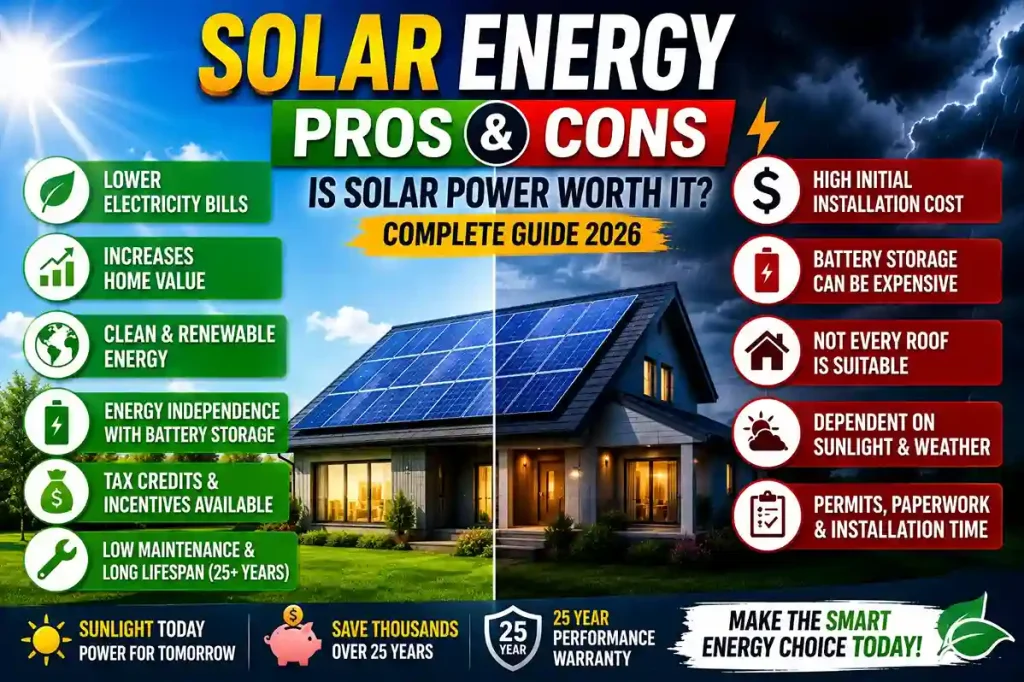
Solar energy has become one of the fastest-growing sources of electricity in the world. Rising utility bills, improved solar technology, and government incentives have encouraged millions of homeowners to consider switching to solar power.
But before investing thousands of dollars in a solar energy system, one important question remains:
Is solar energy really worth it?
The answer depends on your home, energy usage, location, budget, and long-term goals. While solar energy offers significant financial and environmental benefits, it also comes with limitations that homeowners should understand before making a decision.
This guide covers the real-world pros and cons of solar energy, installation costs, savings potential, battery storage, maintenance requirements, and common mistakes homeowners make.
“`What Is Solar Energy?
Solar energy is electricity generated from sunlight.
When sunlight strikes photovoltaic (PV) cells inside a solar panel, it creates direct current (DC) electricity. An inverter then converts that electricity into alternating current (AC), which powers appliances, lights, and electronics inside your home.
Today, solar energy can power:
- Homes
- Businesses
- Farms
- Schools
- Electric vehicles
- Industrial facilities
Quick Overview: Solar Energy Pros and Cons
| Pros | Cons |
|---|---|
| Lower electricity bills | High upfront cost |
| Renewable energy source | Battery storage is expensive |
| Increases home value | Not every roof is ideal |
| Low maintenance | Performance drops at night |
| Tax incentives available | Weather affects production |
| Energy independence | Installation can be complex |
| Backup power options | Some systems require permits |
Advantages of Solar Energy
1. Solar Energy Is Renewable and Sustainable
Unlike fossil fuels, sunlight cannot be depleted.
The sun produces enough energy every hour to power the entire world for a year. Solar energy generates electricity without producing harmful emissions during operation.
Benefits include:
- Reduced carbon footprint
- Cleaner air
- Less dependence on coal and natural gas
- Sustainable long-term energy production
2. Lower Monthly Electricity Bills
One of the biggest reasons homeowners install solar panels is to reduce electricity costs.
Depending on system size and local utility rates, homeowners may reduce electric bills by 50% to 100%.
Example:
| Monthly Bill | Annual Cost |
|---|---|
| $250 | $3,000 |
| $300 | $3,600 |
| $400 | $4,800 |
Over 25 years, those savings can become substantial.
3. Solar Can Increase Home Value
Homes with solar panels are often more attractive to buyers.
Benefits include:
- Lower future utility costs
- Modern energy-efficient upgrades
- Reduced operating expenses
Many real estate markets show solar-equipped homes selling faster than comparable properties.
4. Low Maintenance Requirements
Solar panels have no moving parts.
Most systems require only:
- Occasional cleaning
- Annual inspections
- Monitoring through a mobile app
Many manufacturers provide warranties ranging from 20 to 30 years.
5. Energy Independence
Solar reduces reliance on utility companies.
When combined with battery storage, homeowners can:
- Use more self-generated electricity
- Reduce grid dependence
- Protect against utility price increases
6. Solar Incentives and Tax Credits
Many homeowners qualify for:
- Federal tax credits
- State incentives
- Utility rebates
- Net metering programs
These incentives can significantly reduce installation costs.
7. Solar Works in Most Climates
A common myth is that solar panels only work in hot climates.
In reality:
- Solar panels generate power in cold weather
- Snow often slides off modern panels
- Cooler temperatures can improve efficiency
Solar systems work effectively in many regions of the United States.
Disadvantages of Solar Energy
1. High Initial Installation Cost
The biggest disadvantage is the upfront investment.
Average residential solar systems typically cost:
| System Size | Estimated Cost |
|---|---|
| 4 kW | $10,000–$14,000 |
| 6 kW | $14,000–$20,000 |
| 8 kW | $18,000–$28,000 |
| 10 kW | $24,000–$35,000 |
Although incentives reduce costs, solar remains a significant investment.
2. Battery Storage Can Be Expensive
Solar panels produce electricity during daylight hours.
To use solar power at night, many homeowners install batteries.
Popular battery systems can cost:
- $8,000 to $20,000+
While batteries provide backup power, they increase total project costs significantly.
3. Not Every Roof Is Suitable
Roof factors affecting solar performance include:
- Age
- Direction
- Slope
- Shade
- Structural condition
A roof replacement may be necessary before installation.
4. Solar Panels Don’t Produce Power at Night
Without battery storage, most homeowners rely on the utility grid after sunset.
This limitation surprises many first-time solar buyers.
5. Weather Affects Production
Heavy clouds, storms, and shade can reduce energy output.
Modern systems still produce electricity during cloudy conditions, but overall generation may decline.
6. Installation Requires Proper Planning
Homeowners often underestimate:
- Permit requirements
- HOA restrictions
- Roof upgrades
- Electrical panel upgrades
Planning ahead helps avoid delays and unexpected expenses.
Are Solar Batteries Worth It?
Battery storage may be worthwhile if:
- Power outages are common
- Utility rates are high
- You want energy independence
- Net metering benefits are limited
Battery storage may not be necessary for every homeowner.
How Long Does It Take Solar Panels to Pay for Themselves?
Most residential solar systems reach break-even within:
6 to 12 years
Factors affecting payback include:
- Installation cost
- Utility rates
- Available incentives
- Energy consumption
After reaching break-even, electricity savings continue for many years.
Common Solar Installation Mistakes
Avoid these mistakes:
- Choosing the cheapest installer
- Ignoring roof condition
- Buying an undersized system
- Overlooking future EV charging needs
- Not understanding financing terms
Is Solar Energy Worth It in 2026?
For many homeowners, the answer is yes.
Solar energy can:
- Lower monthly bills
- Increase home value
- Reduce environmental impact
- Provide long-term savings
However, the best results come from proper planning, quality equipment, and realistic expectations.
Final Verdict
Solar energy offers significant long-term advantages, including lower electricity costs, increased property value, energy independence, and environmental benefits. While high upfront costs and battery expenses remain challenges, advances in technology and incentives continue to improve affordability.
For homeowners planning to stay in their property for several years, solar energy is often one of the strongest long-term investments available in 2026.

- Solar Energy Pros and Cons in 2026: Is Solar Power Really Worth It for Homeowners? - June 3, 2026
- Solar Panel Installation in 2026: The Complete Homeowner’s Guide to Costs, Savings, Roof Readiness & Long-Term Benefits - June 3, 2026
- Emergency Plumber Near Me: Complete Guide to Fast Plumbing Repairs, Costs, Services & Career Opportunities - June 3, 2026