Al Pacino Ethnicity: The Sicilian Roots of a Hollywood Legend

Al Pacino is Italian — “all Italian,” in his own famous words. Born Alfredo James Pacino on April 25, 1940, in East Harlem, Manhattan, the legendary actor is of predominantly Sicilian descent, with a touch of Neapolitan heritage. Both of his parents, Rose Gerardi and Salvatore Pacino, were Italian-Americans, and his maternal grandparents emigrated directly from Corleone, Sicily — the very town that would become immortal in the film that made him a star. “In America, most everybody who’s Italian is half Italian. Except me. I’m all Italian,” Pacino once said. “I’m mostly Sicilian, and I have a little bit of Neapolitan in me. You get your full dose with me.”
Quick Facts: Al Pacino
| Detail | Information |
|---|---|
| Full Name | Alfredo James Pacino |
| Date of Birth | April 25, 1940 |
| Birthplace | East Harlem, Manhattan, New York City, USA |
| Ethnicity | Italian (Sicilian, with some Neapolitan) |
| Nationality | American |
| Parents | Salvatore Pacino and Rose Gerardi |
Biography and Early Life
Alfredo James Pacino was born on April 25, 1940, in the East Harlem neighborhood of Manhattan, the only child of Rose (née Gerardi) and Salvatore Pacino. His parents divorced when he was just two years old, and young Alfredo moved with his mother to the South Bronx, into the home of her parents — Kate and James Gerardi — who were Italian emigrants from Corleone, Sicily.
Growing up in the South Bronx of the 1940s and 50s, Pacino was a self-described troublemaker with a vivid imagination. In school, where he was nicknamed both “Sonny” and “the actor,” his favorite subject was English — though he dropped out of most of his classes and eventually left school altogether at 17 after gaining admission by audition to the High School of Performing Arts. His mother, who had dreamed of a more conventional path for her son, disagreed with his decision; after an argument, he left home.
What followed were the leanest years of his life. To finance his acting studies, Pacino worked as a messenger, busboy, janitor, and postal clerk — including a stint in the mailroom of Commentary magazine. He was often unemployed and sometimes homeless, sleeping in theaters, on friends’ couches, and occasionally on the street. He began smoking and drinking at nine and dabbled with marijuana at 13, though he steered clear of hard drugs even as two of his closest friends died from drug abuse at 19 and 30.
Acting was his salvation. Rejected as a teenager by the Actors Studio, he joined HB Studio, where he met acting teacher Charlie Laughton, who became his mentor and closest friend. He later studied under Lee Strasberg — who would memorably appear alongside him in The Godfather Part II — and was eventually accepted into the Actors Studio, where he now serves as co-president. His stage breakthrough came in 1968 with The Indian Wants the Bronx, and four years later, Francis Ford Coppola cast the then-relatively-unknown actor as Michael Corleone in The Godfather — a role Jack Nicholson, Robert Redford, and Warren Beatty had all been considered for. The rest is cinema history.
Al Pacino’s Ethnicity: Pure Sicilian Heritage
Al Pacino’s ethnicity is Italian, and more precisely, overwhelmingly Sicilian. Genealogical research confirms the depth of those roots on both sides of his family. His maternal grandparents, James and Kate Gerardi, emigrated from Corleone — the hill town in western Sicily whose name would become synonymous with the Corleone crime family of The Godfather. The irony was not lost on Pacino: a grandson of Corleone, playing the most famous fictional son of Corleone ever committed to film.
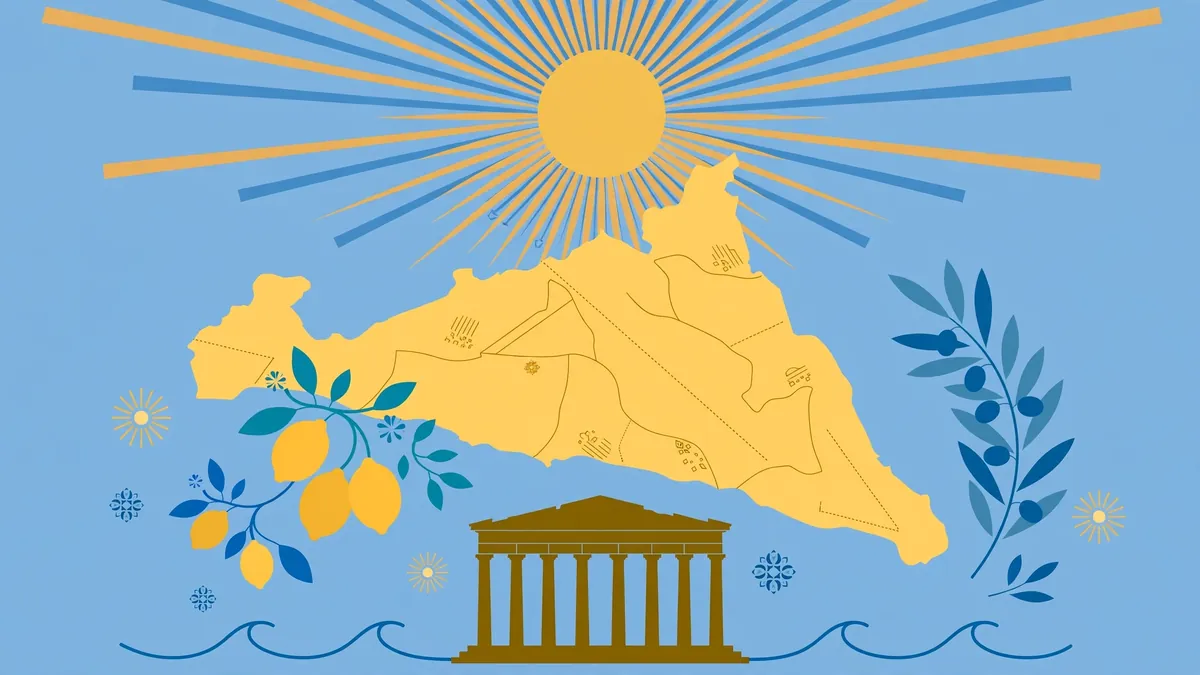
On his father’s side, the Sicilian story continues. His paternal grandfather, Alfio Pacino, was born in San Fratello, in the province of Messina in northeastern Sicily — as was his paternal grandmother, Giuseppa Latteri. The Pacino line in San Fratello stretches back generations, with records tracing the family to Pacino’s five-times great-grandfather, Marco Pacino. His father’s family, like his mother’s, carried the folkways of rural Sicily — its dialect, its food, its fierce family loyalty — across the Atlantic to New York.
The “little bit of Neapolitan” Pacino mentions rounds out the picture: some lines of the family trace to the Naples region of mainland southern Italy. But Sicily dominates, and Pacino has always worn that identity proudly. His famous quote — “You get your full dose with me” — is both a boast and a statement of cultural belonging, delivered in the cadence of the Italian-American New York he grew up in.
That upbringing shaped his art profoundly. The South Bronx of his youth was thick with Italian-American life: the social clubs, the feast days, the code of respect and silence that would later inform his portrayals of Michael Corleone, Tony Montana (a Cuban character played with Italian-American fire), and the haunted cops and criminals of Serpico, Dog Day Afternoon, and Carlito’s Way. Pacino didn’t just play Italian-Americans; he was the culture, and his performances carried an authenticity no amount of method training could manufacture.
His heritage also connects him to the broader story of Southern Italian immigration to America — the millions who arrived between 1880 and 1920, faced discrimination as “not quite white,” and built the vibrant Italian-American communities of New York. Pacino, born into the second generation of that wave, became its most electrifying artistic voice.
Family: Parents, Grandparents, and Children
Pacino’s family story is marked by both deep roots and early loss. His parents’ divorce when he was two meant he was raised primarily by his mother, Rose, and her parents in the Bronx. Rose, who worked to support the family, would take young Alfredo to the movies when she got home from work — “it was her way of getting out, and she would take me with me,” he recalled. He’d come home and act out all the parts. Those movie outings with his mother were his first acting school.
Tragedy struck early: his mother died in 1962 at just 43 years old, when Pacino was 22. His beloved maternal grandfather died the following year. “I was 22 and the two most influential people in my life had gone,” he later said, “so that sent me into a tailspin.” Neither lived to see him become famous — a loss he has carried throughout his career.
His father, Salvatore Pacino, remained a more distant figure, though a photograph of him is among Pacino’s treasured possessions. The paternal Pacino line’s San Fratello origins give the actor’s Sicilian identity its full, both-sides completeness.
Pacino never married, but he is a father of four. He has a daughter, Julie Marie, with former partner and acting coach Jan Tarrant; twins Anton and Olivia with actress Beverly D’Angelo; and a son, Roman, born in 2023, with producer Noor Alfallah. Becoming a father again in his eighties made international headlines and added an unexpected late chapter to his family story.
Career: One of the Greatest Actors of All Time
Al Pacino’s filmography is a monument of American cinema. After The Godfather (1972) and The Godfather Part II (1974) established him as the definitive screen heir to Brando’s legacy, he delivered a run of performances that rank among the finest ever filmed: the idealistic cop of Serpico (1973), the desperate bank robber of Dog Day Afternoon (1975), the volcanic Tony Montana of Scarface (1983), the profane salesman of Glengarry Glen Ross (1992), and the blind, ferocious Frank Slade of Scent of a Woman (1992) — the role that finally won him the Academy Award for Best Actor.
Later career highlights include The Devil’s Advocate (1997), The Insider (1999), Angels in America (2003), Martin Scorsese’s The Irishman (2019), and the Amazon series Hunters (2020–2023). He has also directed films, including Looking for Richard (1996), a celebrated documentary-essay on Shakespeare’s Richard III, and remains co-president of the Actors Studio — the institution that once rejected him.
Through every role, the Sicilian kid from the South Bronx is visible: the intensity, the musicality of his speech, the sense of a man carrying generations of immigrant striving in his bones.
Readers exploring more Hollywood backgrounds can read about Carlos Scola Pliego and Korina Harrison, while fans of screen legends may enjoy our profile on Johnny Depp’s ethnicity. For his complete biography and filmography, see Al Pacino’s Wikipedia page.
Frequently Asked Questions (FAQ)
What is Al Pacino’s ethnicity?
Al Pacino is Italian — predominantly Sicilian, with a little Neapolitan heritage. Both of his parents were Italian-Americans, and his grandparents emigrated from Corleone and San Fratello, Sicily.
What is Al Pacino’s real name?
His real name is Alfredo James Pacino. “Al” is the shortened form he has used throughout his career.
Where was Al Pacino born?
He was born on April 25, 1940, in East Harlem, Manhattan, New York City, and raised in the South Bronx by his mother and maternal grandparents.
Are Al Pacino’s grandparents really from Corleone?
Yes. His maternal grandparents, Kate and James Gerardi, were Italian emigrants from Corleone, Sicily — the same town fictionalized as the home of the Corleone family in The Godfather.
Does Al Pacino have children?
Yes, he has four children: a daughter with Jan Tarrant, twins with Beverly D’Angelo, and a son, Roman, born in 2023 with Noor Alfallah.
Conclusion
Al Pacino’s ethnicity — “all Italian,” mostly Sicilian, with a dash of Neapolitan — is the bedrock beneath one of the greatest acting careers in history. From Corleone and San Fratello to East Harlem and the South Bronx, from a mother who took him to the movies to the stages of Broadway and the sets of Coppola and Scorsese, Pacino carried his heritage into every role. “You get your full dose with me,” he said. Cinema certainly did.
She holds advanced qualifications in Sociology, Anthropology, and Ethnic Studies, fields that focus on human cultures, traditions, migration patterns, and identity development across the world. Her expertise allows her to break down complex cultural topics into easy-to-understand articles that readers genuinely enjoy.
Over the years, Milana has researched hundreds of public figures, communities, and global ethnic groups, making her a trusted voice in the ethnicity niche. Her writing combines factual research, historical understanding, and modern cultural analysis to ensure every article is informative, reliable, and reader-friendly.
Her work focuses on:
* Ethnicity and ancestry research
* Cultural identity and heritage
* Nationality and family background
* Celebrity ethnicity breakdowns
* Global traditions and multicultural studies
Milana’s goal is to provide readers with authentic, well-researched, and trustworthy information while celebrating the diversity of cultures around the world. Through her detailed research and passion for cultural education, she continues to help audiences better understand ethnicity, heritage, and identity in today’s connected world.
- Larry Ellison Ethnicity: Jewish Mother and Italian Father - October 6, 2026
- Charlie Heaton Ethnicity: Nationality, Parents & Background - October 6, 2026
- Hilaria Baldwin Ethnicity: Heritage, Parents & Background Explained - October 6, 2026